
Your Health, We Care


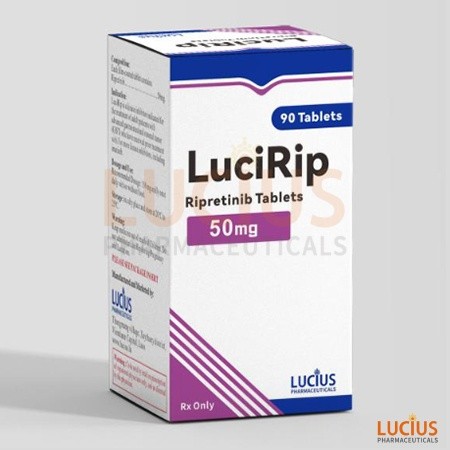
Another NameQinlock、瑞派替尼
IndicationsFor adult patients with advanced gastrointestinal stromal tumors (GIST) who have previously received 3 or more kinase inhibitors, including imatinib.
Specs


Telegram name: Vira
Name: LUCIUS
No.:0085253923643
Ripretinib (LuciRip) is a kinase inhibitor that inhibits KIT proto-oncogene receptor tyrosine kinase (KIT) and platelet-derived growth factor receptor A (PDGFRA) kinases, including wild-type, primary mutations, and secondary mutations. In the treatment sequence, Ripretinib (LuciRip) is indicated for adult patients with advanced gastrointestinal stromal tumors (GIST) after prior treatment with ≥3 kinase inhibitors (including imatinib), i.e., third-line and later therapy.
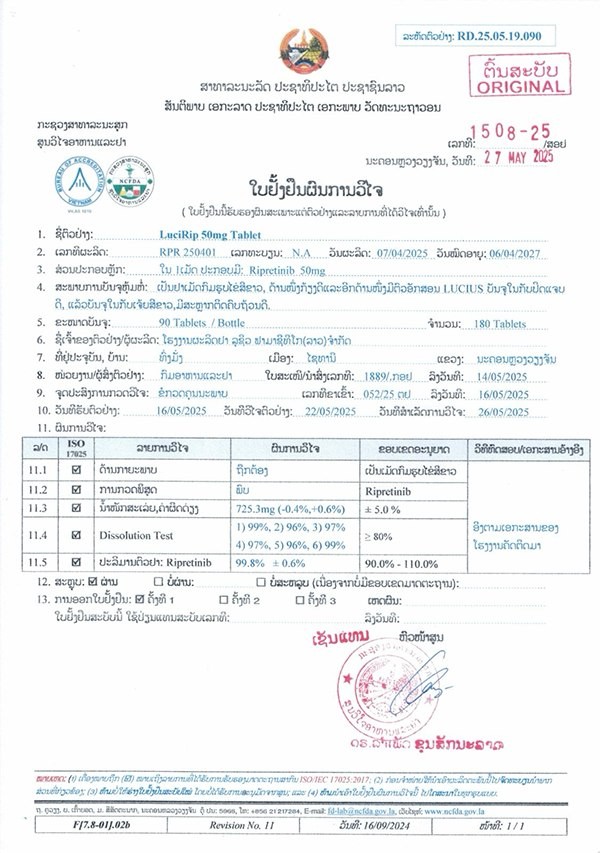
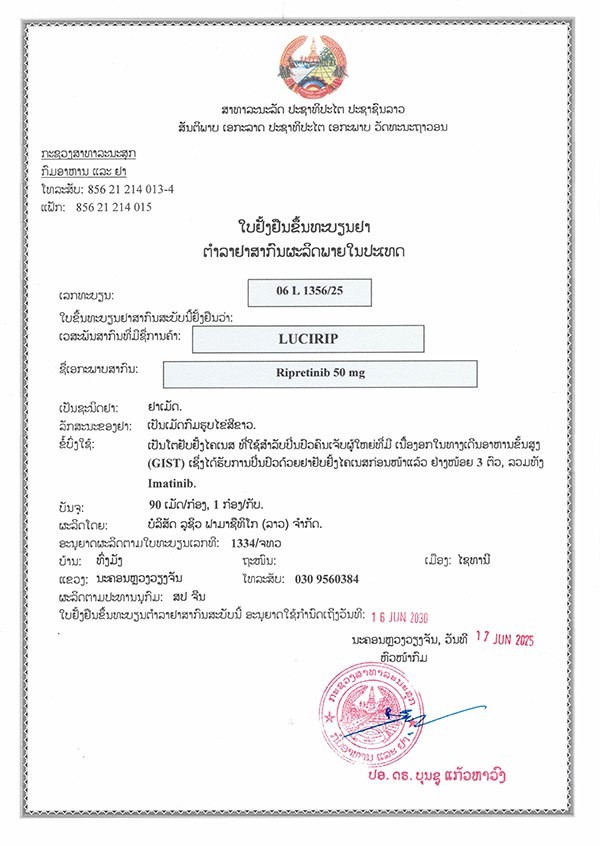
Before initiating Ripretinib (LuciRip) treatment, pregnancy status should be verified in women of reproductive potential. Ejection fraction should be assessed by echocardiogram or MUGA (multigated acquisition) scan before initiating Ripretinib (LuciRip) treatment and as clinically indicated during treatment. Dermatologic examination should be performed when initiating Ripretinib (LuciRip) treatment.
Blood pressure should be monitored during treatment as clinically indicated, and antihypertensive treatment should be initiated or adjusted as appropriate. Dermatologic examinations should be performed routinely during treatment. Ejection fraction should be assessed during treatment as clinically indicated. For patients receiving concomitant strong CYP3A inhibitors, monitor more frequently for adverse reactions; for patients whose dosing frequency is increased to twice daily due to unavoidable concomitant use of moderate CYP3A inducers, monitor clinical efficacy and tolerability.
Ripretinib (LuciRip) may be taken orally with or without food. Instruct patients to swallow tablets whole and not to crush or chew them. Advise patients to take Ripretinib (LuciRip) at the same time each day.
The recommended dosage of Ripretinib (LuciRip) is 150 mg orally once daily, with or without food, continued until disease progression or unacceptable toxicity. For adverse reactions, the recommended dose reduction is 100 mg orally once daily; for patients who cannot tolerate 100 mg orally once daily, permanently discontinue Ripretinib (LuciRip).
If less than 8 hours have elapsed since the missed scheduled dose, patients should be advised to take the missed dose. If vomiting occurs after taking a dose, patients should be advised not to take an additional dose and to resume taking at the next scheduled dose.
For patients whose Ripretinib (LuciRip) dosing is adjusted to twice daily due to concomitant use of moderate CYP3A inducers, missed dose handling is as follows: if less than 4 hours have elapsed since the missed scheduled dose, patients should be advised to take the missed dose as soon as possible and then take the next dose at the regular scheduled time; if more than 4 hours have elapsed since the missed scheduled dose, patients should be advised to skip the missed dose and then take the next dose at the regular scheduled time.
Ripretinib (LuciRip) can cause fetal harm when administered to pregnant women. There are no available data on the use of Ripretinib (LuciRip) in pregnant women to determine drug-associated risk.
Because of the potential for serious adverse reactions in breastfed children, advise women not to breastfeed during treatment with Ripretinib (LuciRip) and for 1 week after the last dose.
Ripretinib (LuciRip) can cause fetal harm when administered to pregnant women. Verify pregnancy status in women of reproductive potential before initiating Ripretinib (LuciRip) treatment. Women of reproductive potential should use effective contraception during treatment with Ripretinib (LuciRip) and for 1 week after the last dose. Men with female partners of reproductive potential should use effective contraception during treatment with Ripretinib (LuciRip) and for 1 week after the last dose.
The safety and efficacy of Ripretinib (LuciRip) in pediatric patients have not been established.
Clinical studies of Ripretinib (LuciRip) did not include a sufficient number of patients aged 65 years and older to determine whether they respond differently from younger patients.
No dose adjustment is required in patients with hepatic impairment (Child-Pugh Class A, B, or C).
The effect of severe renal impairment (CLcr 15 to 29 mL/min) on the pharmacokinetics of Ripretinib (LuciRip) has not been established.
The recommended dose reduction for adverse reactions is 100 mg orally once daily. For patients who cannot tolerate 100 mg orally once daily, permanently discontinue Ripretinib (LuciRip).
1. Palmar-plantar erythrodysesthesia syndrome (PPES)
For Grade 2, withhold Ripretinib (LuciRip) until recovery to ≤Grade 1 or baseline; if recovered within 7 days, resume at the same dose, otherwise resume at a reduced dose; if maintained at ≤Grade 1 or baseline for at least 28 days, consider re-escalating the dose of Ripretinib (LuciRip); if PPES recurs, withhold Ripretinib (LuciRip) until recovery to ≤Grade 1 or baseline, and thereafter resume at a reduced dose regardless of the time required for improvement.
For Grade 3, withhold Ripretinib (LuciRip) for at least 7 days or until recovery to ≤Grade 1 or baseline (up to 28 days), then resume at a reduced dose; if maintained at ≤Grade 1 or baseline for at least 28 days, consider re-escalating the dose.
2. Hypertension
For Grade 3, if symptomatic, withhold Ripretinib (LuciRip) until symptoms resolve and blood pressure is controlled; if blood pressure is controlled to ≤Grade 1 or baseline, resume at the same dose, otherwise resume at a reduced dose. If Grade 3 hypertension recurs, withhold Ripretinib (LuciRip) until symptoms resolve and blood pressure is controlled, then resume at a reduced dose. For Grade 4, permanently discontinue Ripretinib (LuciRip).
3. Left ventricular systolic dysfunction
For Grade 3 or 4, permanently discontinue Ripretinib (LuciRip).
4. Arthralgia or myalgia
For Grade 2, withhold Ripretinib (LuciRip) until recovery to ≤Grade 1 or baseline; if recovered within 7 days, resume at the same dose, otherwise resume at a reduced dose; if maintained at ≤Grade 1 or baseline for at least 28 days, consider re-escalating the dose of Ripretinib (LuciRip); if arthralgia or myalgia recurs, withhold Ripretinib (LuciRip) until recovery to ≤Grade 1 or baseline, and thereafter resume at a reduced dose regardless of the time required for improvement.
For Grade 3, withhold Ripretinib (LuciRip) for at least 7 days or until recovery to ≤Grade 1 or baseline (up to 28 days), then resume at a reduced dose; if maintained at ≤Grade 1 or baseline for at least 28 days, consider re-escalating the dose.
5. Other adverse reactions
For Grade 3 or 4, withhold Ripretinib (LuciRip) until recovery to ≤Grade 1 or baseline (up to 28 days), then resume at a reduced dose, otherwise permanently discontinue Ripretinib (LuciRip); if no recurrence for at least 28 days, consider re-escalating the dose of Ripretinib (LuciRip); if Grade 3 or 4 recurs, permanently discontinue Ripretinib (LuciRip).
Avoid concomitant use of moderate CYP3A inducers during Ripretinib (LuciRip) treatment. If concomitant use of moderate CYP3A inducers cannot be avoided, increase the dosing frequency of Ripretinib (LuciRip) from the recommended 150 mg once daily to 150 mg twice daily during concomitant use, and monitor clinical efficacy and tolerability. If the concomitant moderate CYP3A inducer is discontinued, resume the Ripretinib (LuciRip) dose to 150 mg once daily after 14 days of discontinuation of the moderate CYP3A inducer. For missed dose handling during concomitant use of moderate CYP3A inducers (i.e., Ripretinib (LuciRip) twice-daily dosing), see the "Missed Dose" section.
Avoid concomitant use of Ripretinib (LuciRip) with strong CYP3A inducers. When used concomitantly with strong CYP3A inhibitors, monitor more frequently for adverse reactions.
No dose adjustment is required in patients with hepatic impairment (Child-Pugh Class A, B, or C). Dosage recommendations for patients with severe renal impairment (CLcr 15 to 29 mL/min) have not been established.
Most common adverse reactions (≥20%): alopecia, fatigue, nausea, abdominal pain, constipation, myalgia, diarrhea, decreased appetite, palmar-plantar erythrodysesthesia syndrome, vomiting.
Most common Grade 3 or 4 laboratory abnormalities (≥4%): increased lipase, decreased phosphate.
Ripretinib (LuciRip) can cause palmar-plantar erythrodysesthesia syndrome (PPES). Withhold Ripretinib (LuciRip) based on severity, then resume at the same dose or a reduced dose. Instruct patients to contact their healthcare provider immediately if severe skin changes occur.
Ripretinib (LuciRip) can cause new primary cutaneous malignancies. Perform dermatologic examination when initiating Ripretinib (LuciRip) treatment and routinely during treatment; manage suspicious skin lesions with excision and dermatopathologic evaluation; Ripretinib (LuciRip) may be continued at the same dose. Instruct patients to contact their healthcare provider immediately if skin lesions change or new skin lesions occur.
Ripretinib (LuciRip) can cause hypertension. Monitor blood pressure during treatment as clinically indicated, and initiate or adjust antihypertensive treatment as appropriate. Withhold Ripretinib (LuciRip) based on severity, then resume at the same dose or a reduced dose, or permanently discontinue. Inform patients that hypertension may occur during treatment and that blood pressure should be monitored regularly during treatment.
Ripretinib (LuciRip) can cause cardiac dysfunction. Assess ejection fraction by echocardiogram or MUGA scan before initiating Ripretinib (LuciRip) treatment and as clinically indicated during treatment; for Grade 3 or 4 left ventricular systolic dysfunction, permanently discontinue Ripretinib (LuciRip). Inform patients that heart failure may occur during treatment and that signs and symptoms of heart failure should be monitored regularly during treatment; advise patients to contact their healthcare provider immediately if signs or symptoms of cardiac dysfunction occur.
Impaired wound healing complications can occur in patients receiving drugs that inhibit the vascular endothelial growth factor (VEGF) signaling pathway, and therefore Ripretinib (LuciRip) may adversely affect wound healing. Withhold Ripretinib (LuciRip) for at least 1 week before elective surgery; do not administer for at least 2 weeks after major surgery and until wounds have adequately healed. The safety of resuming Ripretinib (LuciRip) after resolution of wound healing complications has not been established. Inform patients that Ripretinib (LuciRip) may affect wound healing, and advise patients to inform their healthcare provider of any planned surgical procedures.
Ripretinib (LuciRip) may cause photosensitivity. Advise patients to limit direct ultraviolet exposure during treatment with Ripretinib (LuciRip) and for at least 1 week after discontinuation, by using sunscreen and protective clothing.
Ripretinib (LuciRip) can cause fetal harm when administered to pregnant women. Inform pregnant women of the potential risk to the fetus. Women of reproductive potential should use effective contraception during treatment with Ripretinib (LuciRip) and for 1 week after the last dose. Men with female partners of reproductive potential should use effective contraception during treatment with Ripretinib (LuciRip) and for 1 week after the last dose.
Concomitant use of Ripretinib (LuciRip) with strong CYP3A inhibitors increases exposure to Ripretinib (LuciRip) and its active metabolite (DP-5439), which may increase the risk of adverse reactions. Manage by monitoring patients more frequently for adverse reactions.
Concomitant use of Ripretinib (LuciRip) with strong CYP3A inducers decreases exposure to Ripretinib (LuciRip) and its active metabolite (DP-5439), which may reduce the antitumor activity of Ripretinib (LuciRip). Avoid concomitant use of Ripretinib (LuciRip) with strong CYP3A inducers; avoid concomitant use of Ripretinib (LuciRip) with moderate CYP3A inducers.
Telegram name: Vira
Name: LUCIUS
No.:0085253923643
