
Your Health, We Care


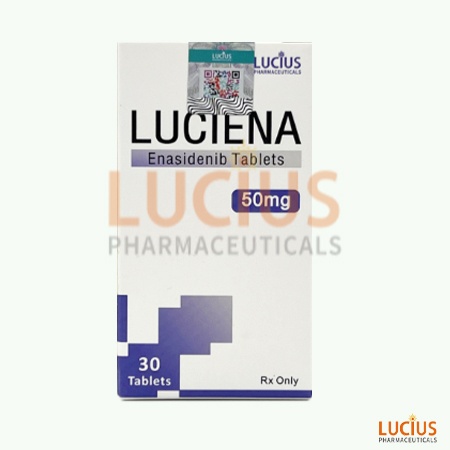
Another Name恩西地平、LuciEna
IndicationsFor the treatment of patients with acute myeloid leukemia (AML) harboring an isocitrate dehydrogenase-2 (IDH2) mutation.
Specs


Telegram name: Vira
Name: LUCIUS
No.:0085253923643
On August 1, 2017, the U.S. Food and Drug Administration (FDA) approved enasidenib, a prescription drug, for the treatment of adult patients with relapsed or refractory acute myeloid leukemia (AML) harboring an IDH2 mutation. The drug selectively inhibits mutant IDH2 forms, including R140Q, R172S, and R172K. Patients should use the medication as directed by a physician.
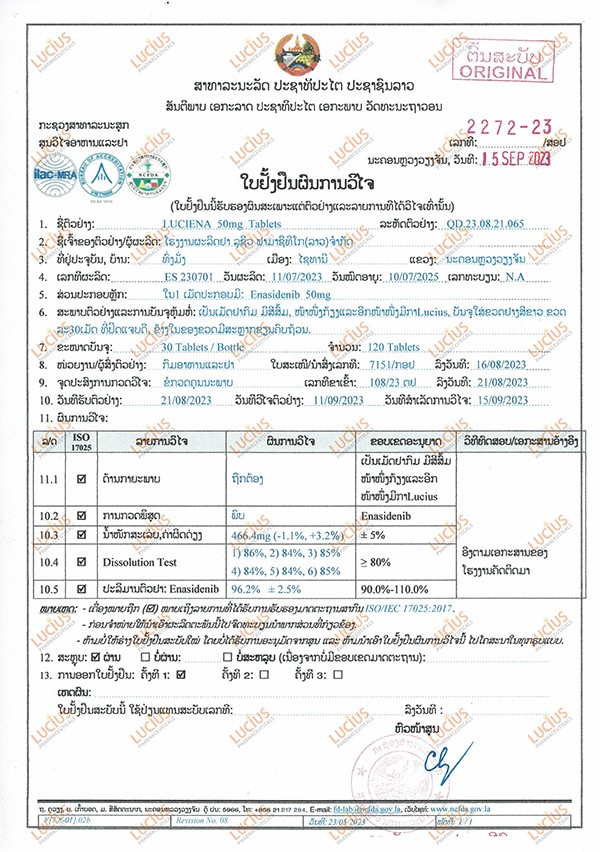
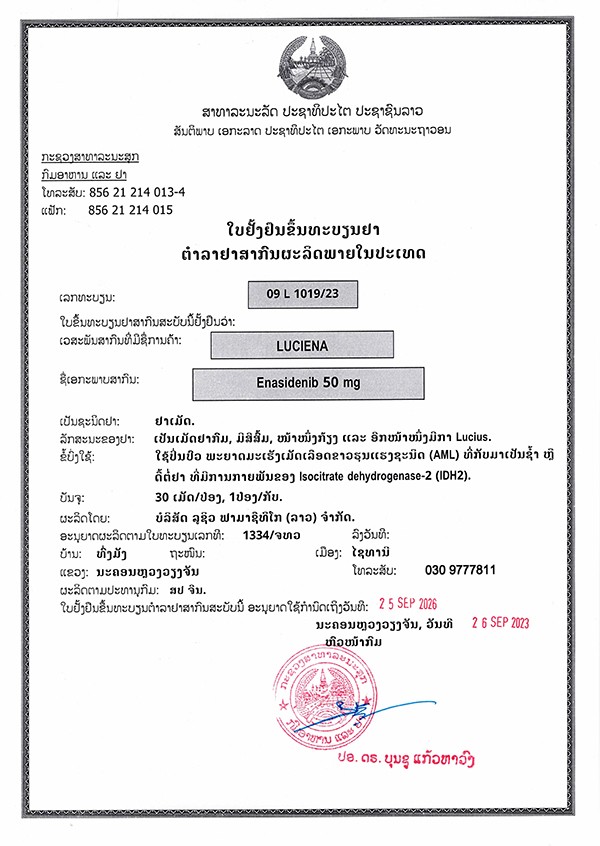
Mutant IDH2 isoforms (R140Q, R172S, and R172K)
In normal healthy bone marrow, stem cells mature into functional red blood cells, white blood cells, and platelets—cells that enter the bloodstream to deliver oxygen, fight infection, and help stop bleeding.In AML, mutations in the IDH2 gene prevent young blood cells in the bone marrow from developing into healthy, mature red blood cells, white blood cells, and platelets.Symptoms of AML begin to appear when there are too many young blood cells and insufficient healthy cells in the bone marrow.Enasidenib relieves the block in the maturation of young blood cells by inhibiting IDH2.This allows young cells in the bone marrow to develop into functional, healthy red blood cells, white blood cells, and platelets, and helps relieve the overcrowding of immature blood cells in the bone marrow.
The recommended dose of enasidenib is 100 mg orally once daily, with or without food, continued until disease progression or unacceptable toxicity.
During treatment, attention must be paid to precautions. Contact a doctor and follow medical advice for specific circumstances.
Recommended Reading: Dosage and Administration of Enasidenib: Basic Usage, Timing, and Dose Adjustment
The most common adverse reactions (≥20%) include:increased total bilirubin (81%), decreased calcium (74%), nausea (50%), diarrhea (43%), decreased potassium (41%), vomiting (34%), decreased appetite (34%), and decreased phosphorus (27%).
The most frequently reported Grade ≥3 adverse reactions (≥5%) include:increased total bilirubin (15%), decreased potassium (15%), decreased phosphorus (8%), decreased calcium (8%), diarrhea (8%), differentiation syndrome (7%), non‑infectious leukocytosis (6%), tumor lysis syndrome (6%), and nausea (5%).
Serious adverse reactions were reported in 77.1% of patients.
The most common serious adverse reactions (≥2%) include:leukocytosis (10%), diarrhea (6%), nausea (5%), vomiting (3%), decreased appetite (3%), tumor lysis syndrome (5%), and differentiation syndrome (8%).
Serious events of differentiation syndrome included fever, acute renal failure, hypoxia, respiratory failure, and multi‑organ failure.
Reference: Adverse Reactions of Enasidenib: Common and Serious Side Effects
Lactation: Due to the potential risk of adverse reactions in breastfed children, women are advised not to breastfeed during treatment with enasidenib and for 2 months after the last dose.
1. If you have the potential to become pregnant, your healthcare provider will perform a pregnancy test before you start taking enasidenib.
2. Male patients whose partners have the potential to become pregnant should use effective contraception during treatment with enasidenib and for at least 2 months after the last dose.
3. Effects on fertility:Enasidenib may impair fertility in females and males, which may affect the ability to have children.Talk to your healthcare provider if you have concerns about fertility.
4. Breastfeeding:If you are breastfeeding or plan to breastfeed.It is not known whether enasidenib passes into breast milk.Breastfeeding should be discontinued during treatment and for 2 months after the last dose.
5. Tell your healthcare provider about all the medicines you take, including prescription and over‑the‑counter medicines, vitamins, and herbal supplements.
FDA,2023.12
Telegram name: Vira
Name: LUCIUS
No.:0085253923643
