
Your Health, We Care


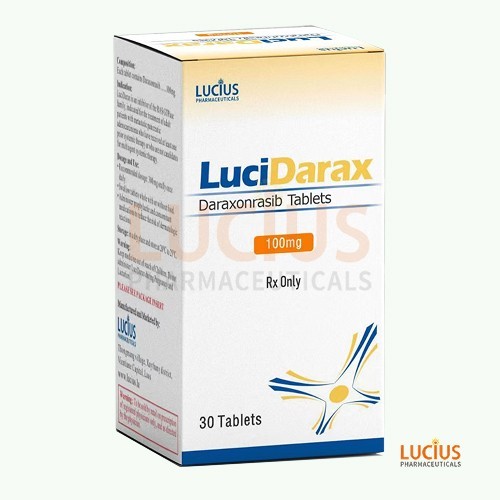
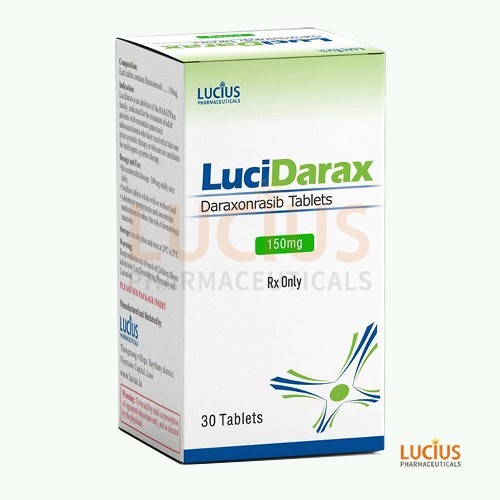
Another NameRasonque、LuciDarax、达拉索拉西布
IndicationsDaraxonrasib for adults with metastatic pancreatic adenocarcinoma who have had ≥1 prior therapy or cannot receive combination anticancer therapy.
Specs


Telegram name: Vira
Name: LUCIUS
No.:0085253923643
Daraxonrasib has potent receptor inhibition, a unique molecular structure, and distinct pharmacokinetics. It is used in selected patients with non-metastatic castration-resistant prostate cancer (nmCRPC) and metastatic hormone-sensitive prostate cancer (mHSPC), typically in combination with other therapies based on disease stage.
Daraxonrasib is a RAS GTPase family inhibitor. It binds to cyclophilin A to form a binary complex, which then binds to the active GTP-bound state of RAS. By blocking the interaction of RAS with downstream effector molecules and promoting GTP hydrolysis to the inactive GDP-bound state, it inhibits RAS signaling.
300 mg orally once daily until disease progression or unacceptable toxicity. Take at the same time each day, with or without food. Swallow whole; do not chew, crush, or split. If a dose is missed and more than 4 hours remain until the next scheduled dose, skip the missed dose and take the next dose as scheduled; do not take two doses at once to make up for a missed dose. If vomiting occurs after taking a dose, do not take an additional dose; take the next dose at the regular time.
To reduce the risk of skin reactions, it is recommended at treatment initiation and throughout treatment: use topical corticosteroids on the face and chest; use an emollient; limit sun exposure and use broad-spectrum sunscreen SPF 30 or higher; consider prophylactic oral antibiotics, such as doxycycline or minocycline.
First dose reduction: 200 mg once daily; second dose reduction: 150 mg once daily; if 150 mg once daily is not tolerated, permanently discontinue.
Adjustment principles:
Rash/Skin Toxicity
Grade 2: Consider holding until recovery to ≤Grade 1, give supportive care, may resume same dose or next lower dose;
Grade 3: Hold until recovery to ≤Grade 1, give supportive care, consider dermatology consultation, resume next lower dose;
Grade 4: Permanently discontinue.
Stomatitis
Grade 2: Consider holding until ≤Grade 1, supportive care, resume same dose or next lower dose;
Grade 3: Hold until ≤Grade 1, supportive care, resume next lower dose;
Grade 4: Permanently discontinue.
Diarrhea
Grade 2: Consider holding until ≤Grade 1, start antidiarrheal therapy, resume same dose or next lower dose;
Grade 3: Hold until ≤Grade 1, start antidiarrheal therapy, resume next lower dose;
Grade 4: Permanently discontinue.
Gastrointestinal Perforation
Hold if suspected;
Grade 3: Hold until ≤Grade 1, if appropriate, resume next lower dose;
Grade 4: Permanently discontinue;
If no other possible cause is identified, may reduce dose or permanently discontinue.
Interstitial Lung Disease/Pneumonitis
Hold if suspected;
Per prescribing information: Grade 2 and Grade 4: permanently discontinue; if no other possible cause is identified, may reduce dose or permanently discontinue.
Nausea or Vomiting
Grade 3: Hold until ≤Grade 1, start or adjust antiemetic regimen, resume next lower dose;
Grade 4: Permanently discontinue.
Other Adverse Reactions
Grade 3: Hold until ≤Grade 1 or baseline, resume next lower dose;
Grade 4: Permanently discontinue.
Strong CYP3A inhibitor + P-gp inhibition: avoid concomitant use.
Strong CYP3A inhibitor, no P-gp inhibition: reduce to 150 mg once daily; after discontinuing the inhibitor for 5 days or 3–5 half-lives (whichever is longer), resume the original dose.
Moderate CYP3A inhibitor + P-gp inhibition: reduce to 100 mg once daily; after discontinuing the inhibitor for 3–5 half-lives, resume the original dose.
Moderate CYP3A inhibitor, no P-gp inhibition: reduce to 200 mg once daily; after discontinuing the inhibitor for 3–5 half-lives, resume the original dose.
P-gp inhibitor: reduce to 150 mg once daily; after discontinuation, resume the original dose.
Strong CYP3A inducer: avoid if possible; if unavoidable, increase to 400 mg once daily; after discontinuation for 7–14 days, resume the original dose.
Moderate CYP3A inducer: increase to 400 mg once daily; after discontinuation for 7–14 days, resume the original dose.
Cyclosporine A: avoid concomitant use with systemic cyclosporine A or its derivatives.
P-gp substrates: administer at least 4 hours apart from daraxonrasib.
Based on animal studies, daraxonrasib can cause fetal harm. There are no available data in pregnant women. Pregnant women should be informed of the potential risk to the fetus.
There are no data on whether daraxonrasib or its metabolites are present in human milk. Because of the potential for serious adverse reactions in breastfed children, advise not to breastfeed during treatment and for 1 week after the last dose.
Pregnancy testing should be performed in females of reproductive potential before starting treatment. Females: use effective contraception during treatment and for 1 week after the last dose. Males: if the female partner is of reproductive potential, use effective contraception during treatment and for 1 week after the last dose.
Safety and effectiveness in pediatric patients have not been established.
No overall differences in safety or efficacy have been observed between elderly and younger patients.
The effect of severe hepatic impairment on the pharmacokinetics of daraxonrasib is unknown.
Rash, pruritus, paronychia, dry skin, skin fissures, redness/swelling/pain around fingernails or toenails, stomatitis, oral ulcers, oral mucositis, oral pain, oral redness, oral swelling, difficulty eating, difficulty speaking, difficulty swallowing, diarrhea, nausea, vomiting, abdominal pain, constipation, gastrointestinal perforation-related abdominal pain, abdominal tenderness, blood in stool, black stool, fever, chills, hematemesis, interstitial lung disease/pneumonitis, cough, shortness of breath, dyspnea, wheezing, fatigue, edema, decreased appetite, bleeding, sepsis, peripheral neuropathy, musculoskeletal pain, renal-limited thrombotic microangiopathy, decreased albumin, decreased corrected calcium, increased AST, increased ALT, decreased sodium, decreased magnesium, increased alkaline phosphatase, increased creatinine, decreased potassium, decreased hemoglobin, decreased lymphocyte count, decreased platelet count, decreased white blood cell count, fetal harm.
Use topical steroid cream on the face and chest as prescribed; use a moisturizer; limit sun exposure, use broad-spectrum sunscreen SPF 30 or higher, wear sun-protective clothing and a hat if necessary; if oral antibiotics are prescribed by the doctor, take them as scheduled; if rash, dry skin, itching, skin fissures, or redness/swelling/pain around fingernails/toenails occurs, tell the doctor immediately.
The doctor may prescribe mouthwash or other medications to treat oral reactions; if difficulty eating, speaking, or swallowing, or oral pain, redness, swelling, ulcers, or sores occurs, tell the doctor immediately.
The doctor may prescribe antidiarrheal medication; if new or worsening diarrhea occurs, or the number of daily bowel movements increases significantly, tell the doctor immediately.
Seek medical attention immediately if severe or persistent abdominal pain, abdominal tenderness, blood in stool or black tarry stool, fever or chills, nausea, vomiting, or hematemesis occurs.
Seek medical attention immediately if new or worsening cough, shortness of breath, dyspnea, or wheezing occurs.
Females of reproductive potential: use effective contraception during treatment and for 1 week after the last dose; males with female partners of reproductive potential: use effective contraception during treatment and for 1 week after the last dose; do not breastfeed during treatment and for 1 week after the last dose; tell the doctor if pregnant or planning to become pregnant.
Tell the doctor about all concomitant medications, including prescription drugs, OTC drugs, vitamins, and herbal products; administer P-gp substrates at least 4 hours apart from daraxonrasib; avoid concomitant use with systemic cyclosporine A or its derivatives; avoid or adjust concomitant use with strong/moderate CYP3A inhibitors or inducers.
Telegram name: Vira
Name: LUCIUS
No.:0085253923643
