
Your Health, We Care


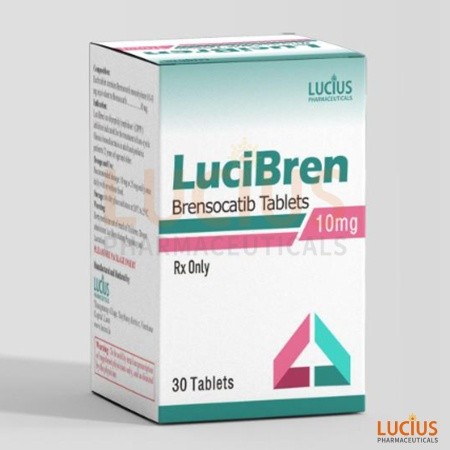
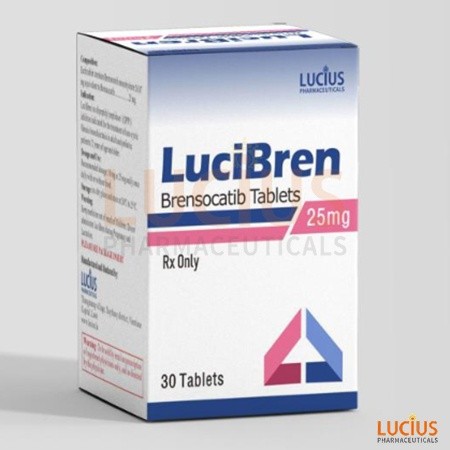
Another NameBrinsupri、布瑞索卡替
IndicationsBrensocatib is indicated for the treatment of non-cystic fibrosis bronchiectasis (NCFB) in adult and pediatric patients 12 years of age and older.
Specs

Telegram name: Vira
Name: LUCIUS
No.:0085253923643
Brensocatib (LuciBren) is a dipeptidyl peptidase 1 (DPP1) inhibitor supplied as oral film-coated tablets. It is a long-term treatment administered orally once daily to reduce the risk of pulmonary exacerbations (PEx) in patients with non-cystic fibrosis bronchiectasis.
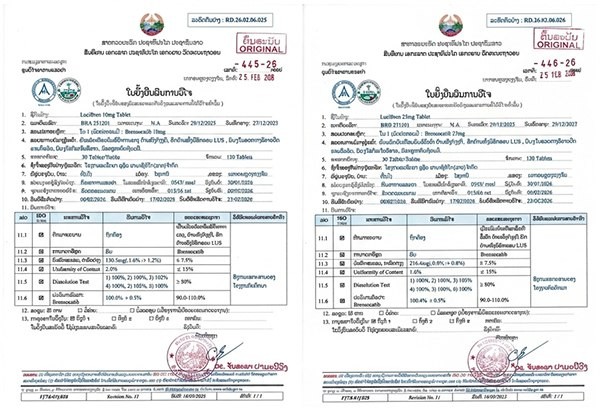
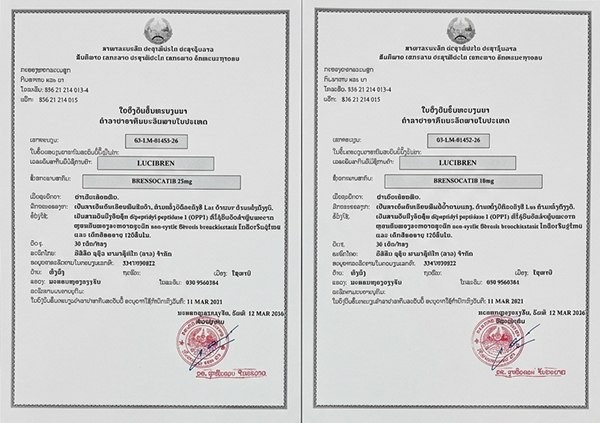
Oral administration. May be taken with or without food. Each dose is taken once daily.
The recommended dosage is 10 mg or 25 mg orally once daily, with or without food.
Brensocatib (LuciBren) tablets are available in two strengths, 10 mg and 25 mg; for both strengths, one tablet per dose achieves the recommended dose, and no tablet splitting is required.
If a patient misses a dose, the next dose should be taken at the regular time on the following day. Do not double the dose to make up for a missed dose.
None.
Skin adverse reactions such as rash, dry skin, and hyperkeratosis have been reported in clinical studies.
Monitor patients for new rash or other skin lesions; patients with new dermatologic findings should be referred to dermatology for evaluation.
Brensocatib use is associated with an increased incidence of gingival and periodontal adverse reactions.
Refer patients to dental services for periodic dental examinations during treatment with Brensocatib; advise patients to maintain routine oral hygiene.
It is not known whether administration of live attenuated vaccines during treatment with Brensocatib affects the safety or efficacy of these vaccines.
Avoid the use of live attenuated vaccines in patients receiving Brensocatib; instruct patients to inform healthcare providers that they are taking Brensocatib before any potential vaccination.
There are no data on the use of Brensocatib in pregnant women to evaluate drug-associated risks of major birth defects, miscarriage, or other adverse maternal or fetal outcomes.
Consider the benefits of breastfeeding for development and health, the mother's clinical need for Brensocatib, and the potential adverse effects of Brensocatib or the mother's underlying disease on the breastfed child.
The safety and efficacy of Brensocatib for the treatment of non-cystic fibrosis bronchiectasis have been established in pediatric patients 12 years of age and older.
The safety and efficacy of Brensocatib in pediatric patients under 12 years of age have not been established.
No differences in safety or efficacy were observed in geriatric patients compared with younger adult patients.
No clinically significant differences in the pharmacokinetics of Brensocatib were observed in patients with mild, moderate, or severe hepatic impairment (Child-Pugh Class A, B, or C).
No clinically significant differences in the pharmacokinetics of Brensocatib were observed in patients with mild, moderate, or severe renal impairment [estimated glomerular filtration rate (eGFR) 15 to 89 mL/min/1.73 m²].
Most common adverse reactions (incidence >2% and higher than placebo): upper respiratory tract infection, headache, rash, dry skin, hyperkeratosis, hypertension.
Brensocatib is a substrate of CYP3A.
When coadministered with the strong CYP3A4 and P-glycoprotein (P-gp) inhibitor clarithromycin 500 mg twice daily for 6 days, the peak concentration (Cmax) of Brensocatib increased by 68% and the area under the plasma concentration-time curve (AUC) increased by 55%.
When coadministered with the moderate CYP3A4 and P-gp inhibitor verapamil 240 mg once daily for 5 days, the Cmax of Brensocatib increased by 53% and the AUC increased by 32%.
When coadministered with the strong CYP3A4 inducer rifampin 600 mg once daily for 9 days, the Cmax of Brensocatib decreased by 15% and the AUC decreased by 33%.
When coadministered with the proton pump inhibitor esomeprazole 40 mg once daily for 4 days, no changes in the Cmax or AUC of Brensocatib were observed.
No clinically significant differences in the pharmacokinetics of midazolam are expected when Brensocatib is coadministered with the sensitive CYP3A4 substrate midazolam.
Regarding cytochrome P450 enzymes: Brensocatib is a substrate of CYP3A; it does not inhibit CYP1A2, CYP2B6, CYP2C8, CYP2C9, CYP2C19, CYP2D6, or CYP3A; Brensocatib is a weak CYP3A inducer but does not induce CYP1A2, CYP2B6, CYP2C8, CYP2C9, or CYP2C19.
Regarding transporter systems: Brensocatib is a substrate of P-glycoprotein (P-gp) and breast cancer resistance protein (BCRP), but not a substrate of MATE1, MATE2-K, OAT1, OAT3, OATP1B1, OATP1B3, OCT1, or OCT2; Brensocatib is an inhibitor of BCRP, OATP1B, MATE1, and MATE2-K, but not an inhibitor of P-gp, OAT1, OCT2, OAT3, or OATP1B3.
Target and Selectivity: Brensocatib is a competitive, reversible inhibitor of dipeptidyl peptidase 1 (DPP1).
Binding Mode: Brensocatib binds to and inhibits DPP1 in a competitive, reversible manner.
Downstream Pathway: DPP1 activates pro-inflammatory neutrophil serine proteases (NSPs) during the maturation of bone marrow neutrophils; activated NSPs are involved in the pathogenesis of neutrophil-mediated inflammation in non-cystic fibrosis bronchiectasis.
Telegram name: Vira
Name: LUCIUS
No.:0085253923643
