
Your Health, We Care


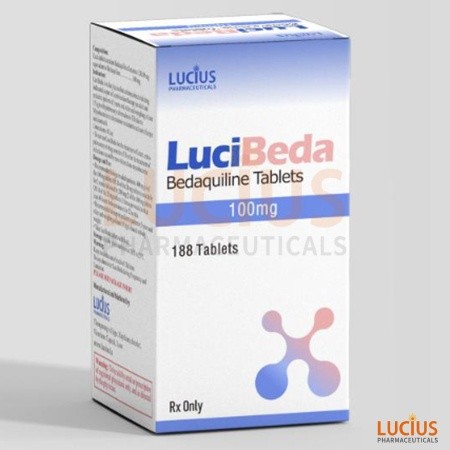
Another NameSirturo、斯耐瑞、贝达喹啉片
IndicationsBedaquiline, as part of combination therapy, is indicated for the treatment of pulmonary tuberculosis (TB) in adult and pediatric patients (2 years of age and older and weighing at least 8 kg) caused
Specs


Telegram name: Vira
Name: LUCIUS
No.:0085253923643
Bedaquiline (LuciBeda) is a diarylquinoline antimycobacterial agent supplied as oral tablets. It should only be used as part of a combination regimen and must not be used for latent Mycobacterium tuberculosis infection, drug-susceptible pulmonary tuberculosis, extrapulmonary tuberculosis, or infections caused by nontuberculous mycobacteria.
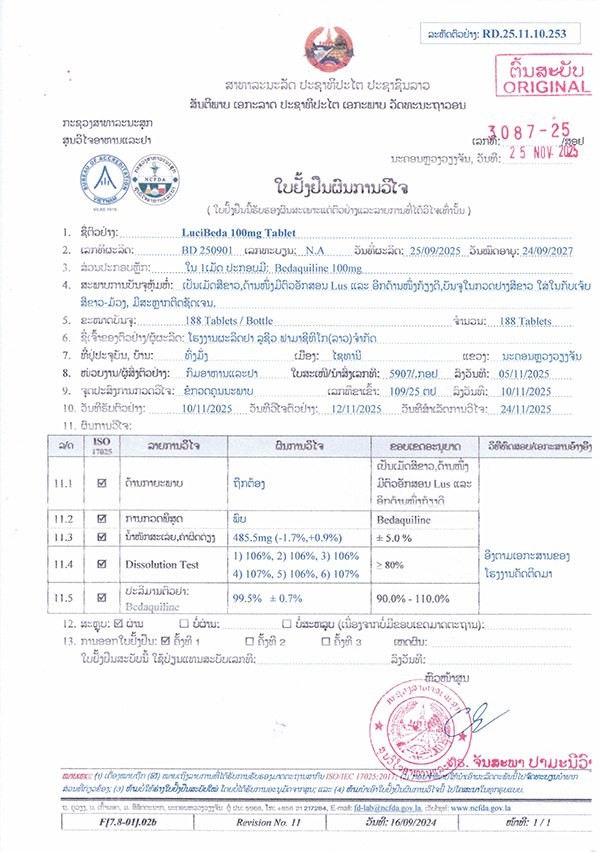
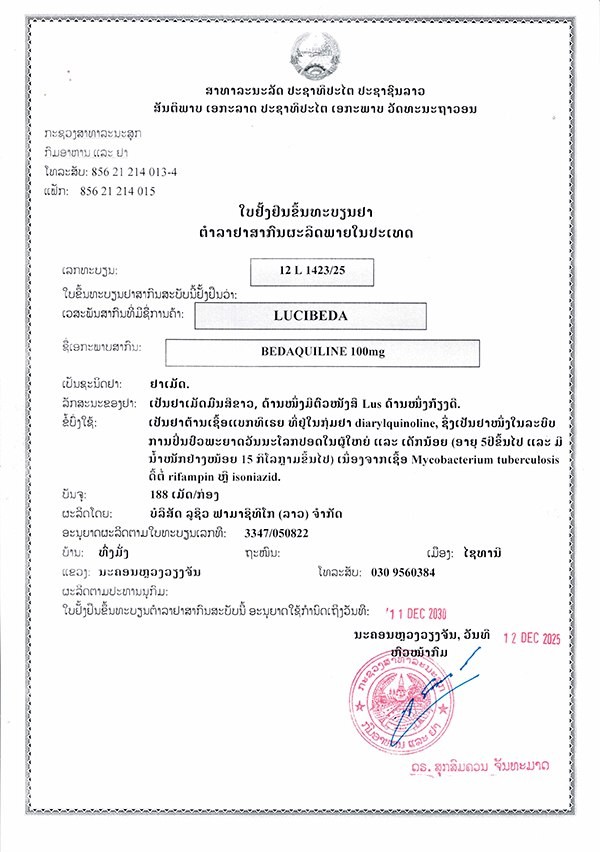
Bedaquiline can cause QTc interval prolongation. Additive QTc interval prolongation may occur when used concomitantly with drugs that prolong the QTc interval. Monitor electrocardiograms. Discontinue Bedaquiline (LuciBeda) if significant ventricular arrhythmia or QTc interval greater than 500 ms occurs.
In an adult placebo-controlled trial (Study 1), the risk of death was higher in the Bedaquiline treatment group than in the placebo group, and the difference could not be explained; a difference in the number of deaths between treatment groups was also observed in a subsequent adult active-controlled trial (Study 4). Use Bedaquiline (LuciBeda) only after a thorough assessment of benefits and risks, and monitor patients closely during treatment.
The following screenings should be completed before initiating Bedaquiline (LuciBeda) treatment:
Obtain drug susceptibility information for the Mycobacterium tuberculosis isolate for the background treatment regimen, if possible.
Electrocardiogram (ECG).
Serum potassium, calcium, and magnesium concentrations.
Liver enzymes.
Bedaquiline (LuciBeda) should be administered under directly observed therapy (DOT). Emphasize the necessity of completing the full course of treatment.
ECG monitoring: Obtain ECGs before initiating treatment, 2 weeks after starting treatment, during treatment, and as clinically indicated; for patients receiving concomitant drugs that prolong the QTc interval, also obtain ECGs at the time when the maximum QTc interval increase from the concomitant drug is expected. If a patient experiences syncope, obtain an ECG to detect QTc interval prolongation.
Electrolyte monitoring: Obtain electrolytes at baseline and during treatment, and correct electrolyte disturbances as clinically indicated.
Liver function monitoring: Monitor symptoms (e.g., fatigue, anorexia, nausea, jaundice, dark urine, liver tenderness, and hepatomegaly) and laboratory tests (alanine aminotransferase [ALT], aspartate aminotransferase [AST], alkaline phosphatase, and bilirubin) at baseline, monthly during treatment, and as needed.
Adult Patients
Weeks 1 and 2: 400 mg orally once daily;
Weeks 3 through 24: 200 mg orally three times weekly, with at least 48 hours between doses.
The total duration of Bedaquiline (LuciBeda) treatment in adults is 24 weeks. When continued treatment beyond 24 weeks is considered truly necessary, it may be continued at 200 mg three times weekly.
Pediatric Patients
The recommended dosage for pediatric patients (5 years of age and older) is based on body weight:
Weight 15 to <30 kg:
Weeks 1-2: 200 mg once daily for 14 consecutive days.
Weeks 3-24: 100 mg three times weekly, with at least 48 hours between doses, for 22 consecutive weeks.
Weight ≥30 kg:
Weeks 1-2: 400 mg once daily for 14 consecutive days.
Weeks 3-24: 200 mg three times weekly, with at least 48 hours between doses, for 22 consecutive weeks.
Note: The safety and efficacy in children under 5 years of age have not been established.
Must be taken with food; swallow tablets whole with water, with food.
If a dose is missed during the first 2 weeks of treatment, do not take the missed dose; skip the missed dose and then continue the daily dosing schedule.
From Week 3 onward, if a dose is missed, take the missed dose as soon as possible, then resume the three-times-weekly dosing schedule. The total dose of Bedaquiline (LuciBeda) during a 7-day period should not exceed the recommended weekly dose, and doses should be at least 24 hours apart.
There is no dose reduction schedule for Bedaquiline (LuciBeda); discontinue Bedaquiline (LuciBeda) for the following toxicities:
Clinically significant ventricular arrhythmia.
QTc interval greater than 500 ms (confirmed by repeat ECG).
Transaminase elevation accompanied by total bilirubin elevation greater than 2 times the upper limit of normal [ULN].
Transaminase elevation greater than 8 times ULN.
Transaminase elevation greater than 5 times ULN persisting for more than 2 weeks.
Strong or moderate CYP3A4 inducers: Avoid concomitant use of Bedaquiline (LuciBeda) with moderate or strong CYP3A4 inducers, such as efavirenz and rifamycins (i.e., rifampin, rifapentine, and rifabutin).
CYP3A4 inhibitors: No adjustment of the Bedaquiline (LuciBeda) dose is required when used concomitantly with CYP3A4 inhibitors, but monitor patient safety closely (e.g., liver function).
Other antimycobacterial drugs: No adjustment of the isoniazid or pyrazinamide dose is required when Bedaquiline (LuciBeda) is used concomitantly with isoniazid or pyrazinamide.
Bedaquiline (LuciBeda) can prolong the QTc interval. Additive QTc interval prolongation may occur when used concomitantly with drugs that prolong the QTc interval.
In an adult placebo-controlled trial (Study 1), the risk of death was higher in the Bedaquiline treatment group than in the placebo treatment group, and the difference could not be explained.
In clinical trials, more liver-related adverse reactions were reported in adult patients receiving Bedaquiline in combination with other antituberculosis drugs than with other antituberculosis drugs without Bedaquiline. Liver-related adverse reactions have also been reported in pediatric patients 5 years of age and older.
High-risk populations: Patients with impaired hepatic function should avoid alcohol and other hepatotoxic drugs when using Bedaquiline (LuciBeda).
Concomitant use with moderate or strong CYP3A4 inducers can decrease systemic exposure to Bedaquiline, possibly reducing the efficacy of Bedaquiline (LuciBeda). Concomitant use with CYP3A4 inhibitors can increase systemic exposure to Bedaquiline, possibly increasing the risk of adverse reactions. Concomitant use with drugs that prolong the QTc interval may result in additional QTc interval prolongation.
There is a potential for Mycobacterium tuberculosis to develop resistance to Bedaquiline.
There is no experience with the treatment of acute overdosage of Bedaquiline (LuciBeda).
Published literature on the use of Bedaquiline (LuciBeda) in pregnant women is insufficient to assess the drug-associated risk of major birth defects, miscarriage, or adverse maternal or fetal outcomes. Active tuberculosis during pregnancy carries associated risks.
If an infant is exposed to Bedaquiline through breast milk, monitor the infant for signs of Bedaquiline-related adverse reactions, such as hepatotoxicity (yellowing of the eyes, and changes in urine or stool color).
The safety and efficacy of Bedaquiline (LuciBeda) have been established in pediatric patients 2 years of age and older and weighing at least 8 kg.
The safety, efficacy, and dosage of Bedaquiline (LuciBeda) in pediatric patients under 2 years of age and/or weighing less than 8 kg have not been established.
Clinical studies of Bedaquiline (LuciBeda) did not include a sufficient number of patients aged 65 years and older to determine whether they respond differently from younger adult patients. Monitor QTc interval, electrolytes, and liver function as clinically indicated in patients aged 65 years and older using Bedaquiline (LuciBeda).
No dose adjustment of Bedaquiline (LuciBeda) is required in patients with mild or moderate hepatic impairment.
Severe hepatic impairment has not been studied; use with caution and only when the benefits outweigh the risks; clinical monitoring for Bedaquiline (LuciBeda)-related adverse reactions is recommended.
No dose adjustment is required in patients with mild or moderate renal impairment.
Use with caution in patients with severe renal impairment or end-stage renal disease requiring hemodialysis or peritoneal dialysis, and monitor adult and pediatric patients for Bedaquiline (LuciBeda)-related adverse reactions.
Most common adverse reactions (in Study 1, in patients receiving Bedaquiline with incidence greater than or equal to 10%): nausea (38%), arthralgia (33%), headache (28%), hemoptysis (18%), chest pain (11%). Other selected adverse reactions with higher incidence in the Bedaquiline group than in the placebo group in Study 1 included anorexia (9%), transaminase elevation (9%), rash (8%), and blood amylase increased (3%).
Most common adverse reactions (in Study 4, in the 40-week Bedaquiline-containing regimen group, incidence greater than or equal to 10%): QTc prolongation (61%), nausea (54%), vomiting (53%), arthralgia (44%), transaminase elevation (30%), abdominal pain (28%), pruritus (27%), dizziness (18%), headache (17%), chest pain (16%), rash (14%), insomnia (14%), dry skin (12%), palpitations (10%). Other selected adverse reactions with incidence greater than or equal to 5% in this group included myalgia (9%), paresthesia (8%), and diarrhea (6%). The most common selected adverse reactions (greater than 10%) in the 28-week Bedaquiline-containing group (143 patients) in Study 4 were QTc prolongation (56%), arthralgia (55%), nausea (43%), vomiting (29%), pruritus (25%), transaminase elevation (21%), dizziness (21%), chest pain (17%), abdominal pain (17%), headache (16%), rash (12%), and hemoptysis (11%).
Most common adverse reactions (in pediatric patients 12 to less than 18 years of age, incidence greater than or equal to 10%): arthralgia (40%, 6/15), nausea (13%, 2/15), abdominal pain (13%, 2/15).
Most common adverse reactions (in pediatric patients 5 to less than 12 years of age, incidence greater than or equal to 10%): liver enzyme elevation (33%, 5/15).
Most common adverse reactions (in pediatric patients 2 to less than 5 years of age, incidence greater than or equal to 10%): vomiting (20%, 3/15).
Most common laboratory abnormalities (greater than or equal to 10%): transaminase elevation at least 3 times ULN occurred in 11/102 (10.8%) in the Bedaquiline treatment group and 6/105 (5.7%) in the placebo treatment group; in Study 3 in 22/230 (9.6%); during the treatment period of Study 4 in 45/211 (21%) in the 40-week Bedaquiline treatment group, 45/202 (22%) in the 40-week active control group, and 23/143 (16%) in the 28-week Bedaquiline-containing group. Laboratory abnormalities in pediatric patients were comparable to those in adults.
Monitor ECG, electrolytes, and liver function during treatment, and repeat blood amylase and blood cell-related parameters as clinically indicated.
Avoid concomitant use of Bedaquiline (LuciBeda) with strong or moderate CYP3A4 inducers, such as efavirenz and rifamycins (i.e., rifampin, rifapentine, and rifabutin).
No adjustment of the Bedaquiline (LuciBeda) dose is required when used concomitantly with CYP3A4 inhibitors, but monitor patient safety closely (e.g., liver function).
No adjustment of the isoniazid or pyrazinamide dose is required when Bedaquiline (LuciBeda) is used concomitantly with isoniazid or pyrazinamide.
In clinical trials in adult patients, additional QTc interval prolongation was observed during combination treatment with Bedaquiline (LuciBeda) and other drugs that prolong the QTc interval.
When Bedaquiline (LuciBeda) is used in patients receiving other drugs that prolong the QTc interval, monitor ECGs before initiating treatment and at the time when the maximum QTc interval increase from the concomitant drug is expected; discontinue Bedaquiline (LuciBeda) if evidence of severe ventricular arrhythmia or QTc interval greater than 500 ms occurs.
In vitro studies showed that Bedaquiline did not significantly inhibit the activity of the following tested cytochrome P450 (CYP450) enzymes: CYP1A2, CYP2A6, CYP2C8/9/10, CYP2C19, CYP2D6, CYP2E1, CYP3A4, CYP3A4/5, and CYP4A, and did not induce the activity of CYP1A2, CYP2C9, CYP2C19, or CYP3A4.
Bedaquiline (LuciBeda) is a CYP3A4 substrate; when used concomitantly with drugs that affect CYP3A4 activity, manage as described in the above sections; no other dosage adjustments based on in vitro inhibition or induction are recommended.
Target and Selectivity: Bedaquiline is a diarylquinoline antimycobacterial agent that inhibits mycobacterial ATP (adenosine 5'-triphosphate) synthase, an enzyme essential for energy generation in Mycobacterium tuberculosis.
Binding Mode: Bedaquiline inhibits the enzyme by binding to the c subunit of ATP synthase.
Downstream Pathway: Bedaquiline has activity against Mycobacterium tuberculosis. Its major metabolite M2 is considered to contribute little to clinical efficacy because of its low mean exposure in humans (23% to 31%) and antimycobacterial activity 3- to 6-fold lower than the parent compound; however, plasma concentrations of M2 are associated with QTc interval prolongation. There is a potential for Mycobacterium tuberculosis to develop resistance to Bedaquiline; modifications of the atpE target gene and/or upregulation of the MmpS5-MmpL5 efflux pump (Rv0678 mutation) are associated with increased minimum inhibitory concentrations (MICs) of Bedaquiline in isolates.
Telegram name: Vira
Name: LUCIUS
No.:0085253923643
