
Your Health, We Care


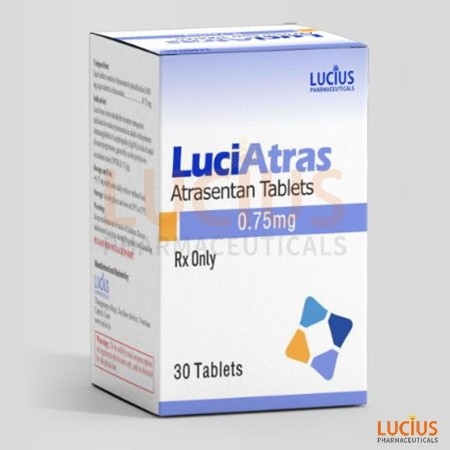
Another NameVanrafia、阿曲生坦
IndicationsAtrasentan is indicated to reduce proteinuria in adult patients with primary immunoglobulin A nephropathy (IgAN) who are at risk of rapid disease progression, generally defined as a urine protein-to-c
Specs


Telegram name: Vira
Name: LUCIUS
No.:0085253923643
Atrasentan (LuciAtras) is an endothelin type A (ETA) receptor antagonist supplied as oral tablets, indicated to reduce proteinuria in adult patients with primary immunoglobulin A nephropathy (IgAN).
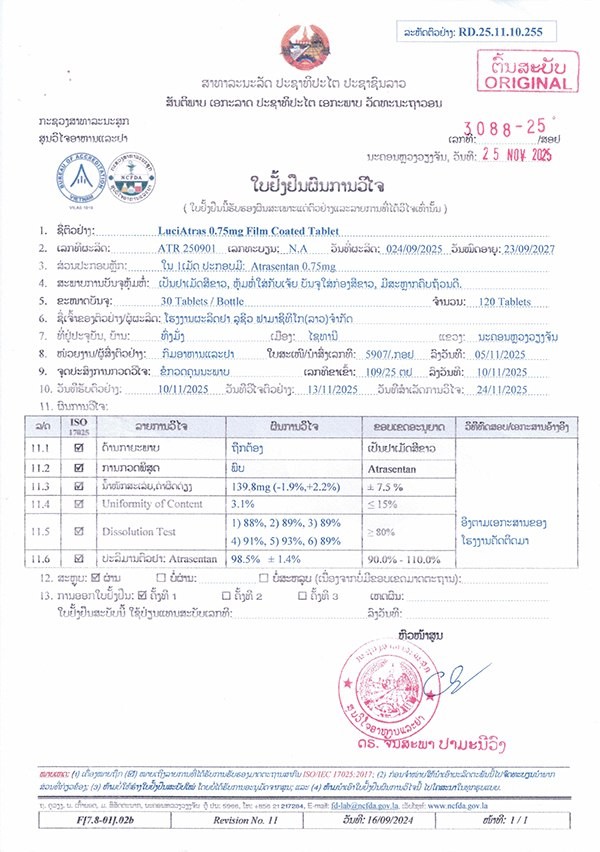
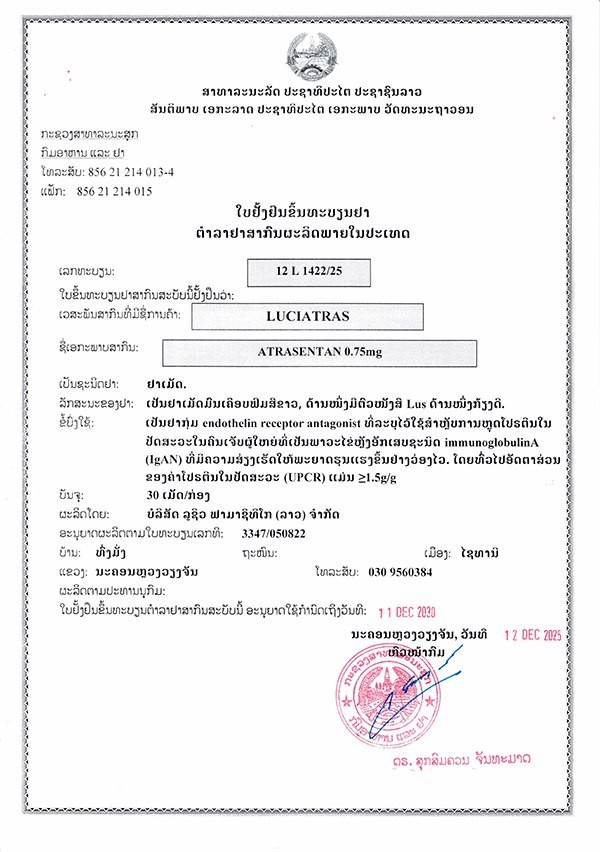
Atrasentan (LuciAtras) is contraindicated in pregnant patients; based on animal data, Atrasentan (LuciAtras) may cause serious birth defects when used during pregnancy. Pregnancy should be excluded before initiating Atrasentan (LuciAtras) treatment. Patients should be advised to use effective contraception before initiating Atrasentan (LuciAtras) treatment, during treatment, and for two weeks after discontinuation. If a patient becomes pregnant, Atrasentan (LuciAtras) should be discontinued as soon as possible.
Pregnancy should be excluded before initiating Atrasentan (LuciAtras) treatment. Liver enzyme testing should be performed before initiating Atrasentan (LuciAtras) treatment.
Liver enzymes should be retested during treatment as clinically needed. For patients with elevated baseline aminotransferases (more than 3 times the upper limit of normal [ULN]), periodic liver function monitoring may be considered. During treatment, monitor for signs of fluid retention (e.g., abnormal weight gain, ankle or leg swelling) and manifestations related to anemia. Decreased hemoglobin was observed in clinical studies, but no discontinuation occurred due to anemia or decreased hemoglobin.
Patients who can become pregnant while using Atrasentan (LuciAtras) should use effective contraception before initiating Atrasentan (LuciAtras) treatment, during treatment, and for two weeks after discontinuation to prevent pregnancy.
Atrasentan (LuciAtras) is administered orally once daily, with or without food. Swallow tablets whole; do not cut, crush, or chew.
The recommended dosage of Atrasentan (LuciAtras) is 0.75 mg orally once daily, with or without food.
If one or more doses are missed, take the prescribed dose at the next scheduled dosing time. Do not double the dose to make up for a missed dose.
Contraindicated.
Advise patients not to breastfeed during treatment.
Contraception: Patients who can become pregnant while using Atrasentan (LuciAtras) should use effective contraception before initiating treatment, during treatment, and for two weeks after discontinuation to prevent pregnancy.
Fertility: Decreased sperm counts were observed in some patients with diabetic kidney disease (DKD) receiving Atrasentan (LuciAtras) 0.75 mg once daily, and returned to normal within approximately 3 months after discontinuation. This effect has not been studied in patients with IgAN.
The safety and efficacy of Atrasentan (LuciAtras) in pediatric patients have not been established.
No overall differences in safety and efficacy were observed compared with younger patients.
No dose adjustment is required in patients with mild or moderate hepatic impairment.
Atrasentan (LuciAtras) treatment should not be initiated in patients with severe hepatic impairment.
Based on age (19 to 77 years), sex, race, mild to severe renal impairment (eGFR 15 to 90 mL/min/1.73 m², estimated by CKD-EPI), or mild to moderate hepatic impairment (Child-Pugh Class A or B), no clinically significant differences in the pharmacokinetics of Atrasentan were observed.
The effect of severe hepatic impairment (Child-Pugh Class C) or end-stage renal disease (eGFR below 15 mL/min/1.73 m²) on the pharmacokinetics of Atrasentan has not been established.
Atrasentan (LuciAtras) is contraindicated in the following patients:
Pregnancy: Atrasentan (LuciAtras) is contraindicated in pregnant patients.
Hypersensitivity: Atrasentan (LuciAtras) is contraindicated in patients with a history of hypersensitivity to Atrasentan or any component of Atrasentan (LuciAtras).
Pregnancy should be excluded before initiating treatment; patients should be advised to use effective contraception before initiating Atrasentan (LuciAtras) treatment, during treatment, and for two weeks after discontinuation; if pregnancy is detected, Atrasentan (LuciAtras) should be discontinued as soon as possible.
Some endothelin receptor antagonists (ERAs) can cause aminotransferase elevations, hepatotoxicity, and hepatic failure. Liver enzyme testing should be performed before initiating treatment and retested during treatment as clinically needed.
Endothelin receptor antagonists (ERAs) can cause fluid retention.
Similar to other endothelin receptor antagonists (ERAs), Atrasentan (LuciAtras) may adversely affect spermatogenesis.
Most common adverse reactions (≥5%): peripheral edema and anemia.
Avoid concomitant use with strong or moderate cytochrome P450 3A (CYP3A) inducers.
Avoid concomitant use with organic anion transporting polypeptide 1B1/1B3 (OATP1B1/1B3) inhibitors.
When a single 10 mg dose of Atrasentan (LuciAtras) was coadministered with ketoconazole (a strong CYP3A inhibitor), the AUC of Atrasentan increased by 90%.
In vitro studies show that Atrasentan is a substrate of P-glycoprotein (P-gp) and OATP1B1/1B3. When Atrasentan (LuciAtras) was coadministered with midazolam (a CYP3A4 substrate), losartan (a CYP2C9 and CYP3A4 substrate), or fexofenadine (a P-gp substrate), no clinically significant differences in the pharmacokinetics of these drugs were observed or expected.
Target and Selectivity: Atrasentan is an endothelin type A (ETA) receptor antagonist with more than 1800-fold selectivity for the ETA receptor over the endothelin type B (ETB) receptor (inhibition constant Ki of 0.034 nM for ETA and 63.3 nM for ETB).
Binding Mode: Atrasentan binds to the ETA receptor with high affinity. Atrasentan itself is active and is not a prodrug.
Downstream Pathway: Endothelin (ET)-1 is believed to be involved in the pathogenesis of IgAN via the ETA receptor.
Clinical Outcomes: In clinical studies, Atrasentan (LuciAtras) treatment reduced UPCR (i.e., reduced proteinuria) in patients with IgAN.
Inform patients to use effective contraception before initiating Atrasentan (LuciAtras) treatment, during treatment, and for two weeks after discontinuation; if menstruation is delayed or pregnancy is suspected, contact a physician immediately.
Inform patients to swallow Atrasentan (LuciAtras) tablets whole; do not cut, crush, or chew; if one or more doses are missed, take the dose at the next scheduled dosing time and do not double the dose.
Inform patients to contact a physician immediately if unexplained nausea, vomiting, right upper abdominal pain, fatigue, anorexia, jaundice, dark urine, fever, or pruritus occurs.
Inform patients to contact a physician if abnormal weight gain or ankle or leg swelling occurs.
Advise patients not to breastfeed during treatment.
Telegram name: Vira
Name: LUCIUS
No.:0085253923643
