
Your Health, We Care


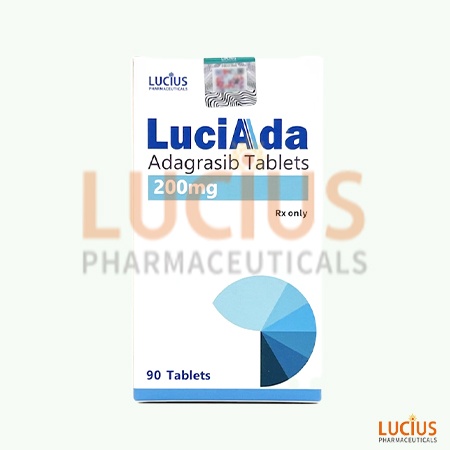
Another Name阿达格拉西布、LuciAda、MRTX849
IndicationsIt is indicated for adult patients with previously treated KRAS G12C-mutant advanced non-small cell lung cancer or colorectal cancer.
Specs

Telegram name: Vira
Name: LUCIUS
No.:0085253923643
In 2022, adagrasib, a prescription drug targeting KRAS G12C, received accelerated approval from the U.S. Food and Drug Administration (FDA). Patients must strictly follow medical advice.
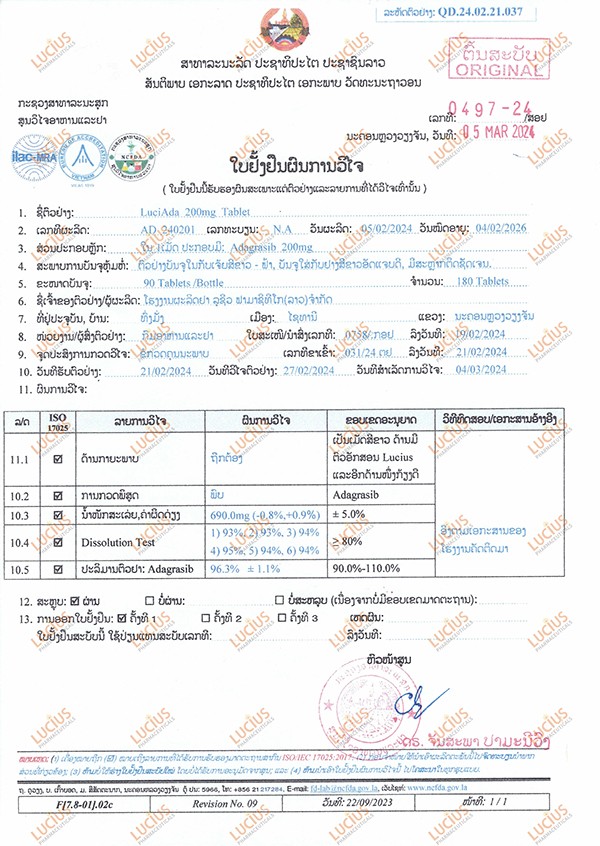
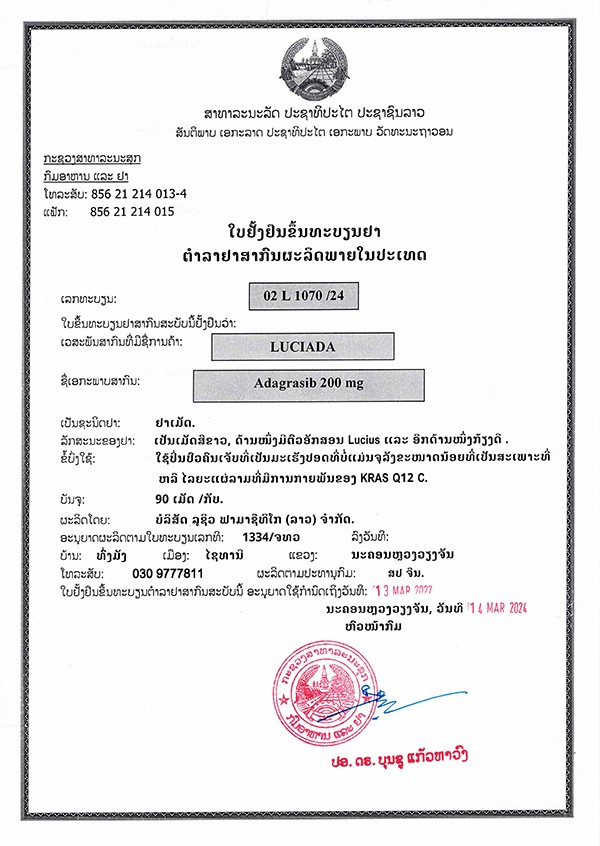
KRASG12C
Route and frequency of administration for Adagrasib: Oral.
The dosage of Adagrasib should be adjusted based on the patient's actual condition. For specific details, consult a doctor and follow medical advice.
Recommended reading: Dosage and administration of Adagrasib
Common side effects: nausea, diarrhea, dyspnea, etc.
Serious side effects: severe gastrointestinal issues, QTc interval prolongation, liver problems, etc.
Reference article: Side effects of Adagrasib
Pregnancy: It is not known whether KRAZATI may harm an unborn baby.
Breastfeeding: It is not known whether Adagrasib passes into breast milk. Do not breastfeed during treatment with Adagrasib and for 1 week after the last dose.
1. Inform patients that Adagrasib may cause severe gastrointestinal adverse reactions (e.g., severe nausea, diarrhea and/or vomiting; gastrointestinal bleeding or obstruction; colitis; intestinal stricture). If signs and symptoms related to severe or persistent gastrointestinal adverse reactions occur, they should contact their healthcare provider promptly.
2. Inform patients that Adagrasib may cause QTc interval prolongation. If signs and symptoms related to arrhythmias (e.g., dizziness, lightheadedness, palpitations) occur, they should contact their healthcare provider.
3. Inform patients that Adagrasib may cause hepatotoxicity. If signs and symptoms related to liver function abnormalities (e.g., jaundice, dark or tea-colored urine, light-colored stools, loss of appetite, right upper abdominal pain) occur, they should contact their healthcare provider immediately.
FDA,2022.12
Telegram name: Vira
Name: LUCIUS
No.:0085253923643
