
Your Health, We Care


Release date: 2025-12-15 15:09:05 Recommended: 284
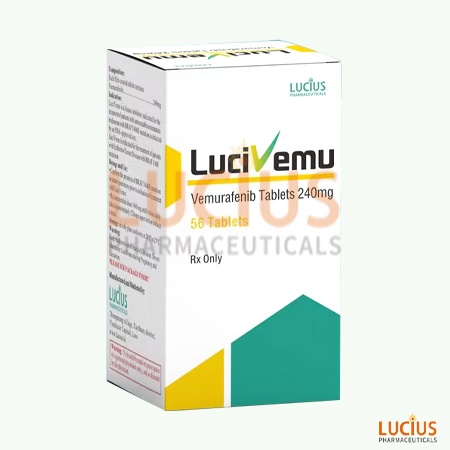
Vemurafenib is a kinase inhibitor indicated for the treatment of patients with unresectable or metastatic melanoma with BRAF V600E mutation detected by a test approved by the U.S. Food and Drug Administration.
Vemurafenib is indicated for the treatment of patients with Erdheim-Chester disease (ECD) harboring BRAF V600 mutations.
Use Limitations: Vemurafenib is not indicated for the treatment of patients with wild-type BRAF melanoma.
Confirm the presence of BRAF V600E mutation in tumor samples before initiating vemurafenib treatment.
Recommended Dose: 960 mg orally twice daily, approximately 12 hours apart, with or without food.
Lactating Women: Discontinue breastfeeding during treatment with ZELBORAF.
New Primary Cutaneous Malignancies: Perform dermatologic evaluations before initiating treatment, every 2 months during treatment, and for up to 6 months after discontinuing vemurafenib. Treatment may be continued after resection without dose adjustment.
New Non-Cutaneous Squamous Cell Carcinomas: Periodically assess for signs or clinical symptoms of new non-cutaneous squamous cell carcinomas before and during treatment.
Other Malignancies: Closely monitor patients receiving vemurafenib for signs or symptoms of other malignancies.
Tumor Promotion in Wild-Type BRAF Melanoma: BRAF inhibitors may increase cell proliferation.
Severe Hypersensitivity Reactions, Including Anaphylaxis and Drug Reaction with Eosinophilia and Systemic Symptoms (DRESS Syndrome): Discontinue vemurafenib in case of severe hypersensitivity reactions.
Severe Dermatologic Reactions, Including Stevens-Johnson Syndrome (SJS) and Toxic Epidermal Necrolysis (TEN): Discontinue vemurafenib in patients with severe dermatologic reactions.
QT Interval Prolongation: Monitor electrocardiograms (ECGs) and electrolytes before and during treatment. Hold vemurafenib if QTc interval is ≥500 ms. Correct electrolyte abnormalities and control cardiac risk factors for QT interval prolongation.
Hepatotoxicity: Measure liver enzymes and bilirubin before initiating vemurafenib treatment and monitor monthly during treatment.
Photosensitivity: Advise patients to avoid sun exposure.
Severe Ocular Reactions: Monitor for signs and symptoms of uveitis.
Embryo-Fetal Toxicity: May cause fetal harm. Inform females of potential fetal risk and advise use of effective contraception.
Radiation Sensitization and Radiation Recall: Severe cases have been reported.
Renal Failure: Measure serum creatinine before initiating vemurafenib and monitor periodically during treatment.
Dupuytren's Contracture and Plantar Fascial Fibromatosis: Manage events by dose reduction, treatment interruption, or treatment discontinuation.
Avoid concomitant administration of vemurafenib with strong CYP3A4 inhibitors or inducers.
CYP1A2 Substrates: Vemurafenib may increase the concentrations of CYP1A2 substrates. Avoid concomitant use of vemurafenib and CYP1A2 substrates with a narrow therapeutic window. If co-administration is unavoidable, closely monitor for toxicities and consider reducing the dose of the CYP1A2 substrate.
Melanoma: The most common adverse reactions (≥30%) are arthralgia, rash, alopecia, fatigue, photosensitivity reaction, nausea, pruritus, and cutaneous papilloma.
Erdheim-Chester Disease: The most common adverse reactions (>50%) are arthralgia, rash, maculopapular rash, alopecia, fatigue, QT interval prolongation on electrocardiogram, and cutaneous papilloma.
Not established.
Tablets.
Store at 20°C to 25°C (68°F to 77°F); excursions permitted between 15°C and 30°C (59°F and 86°F) for short-distance transportation.


Telegram name: Vira
Name: LUCIUS
No.:0085253923643
