
Your Health, We Care


Another NameRINVOQ、Rematib、upanib、乌帕替尼
IndicationsUpadacitinib can regulate abnormal immune responses, alleviate inflammation and symptoms of diseases.
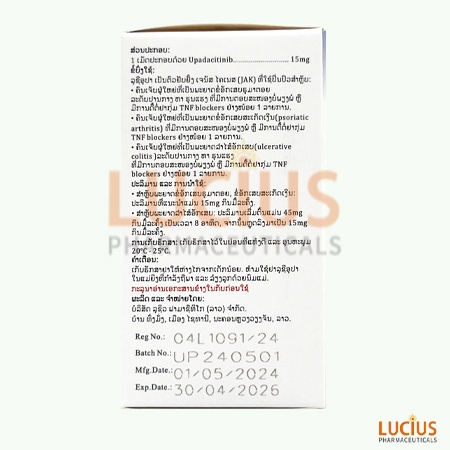
Reg No.04 L 1091/24
Inspection NO.0668-24


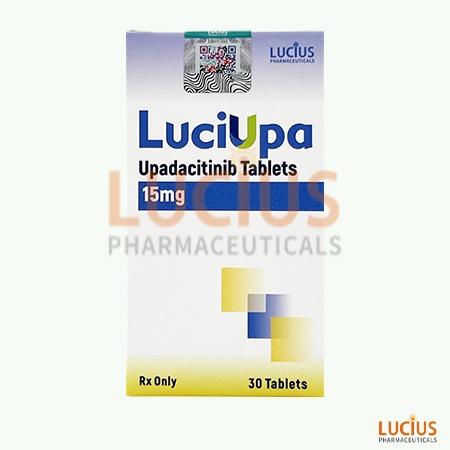
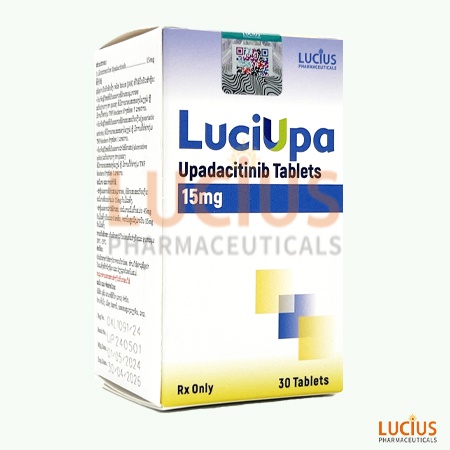
The drug specification for Lucius version Upadacitinib is 15mg * 30tablets.
Upadacitinib was first approved for marketing in the United States in August 2019 for the treatment of rheumatoid arthritis. Approved by the European Union in December 2019 for the treatment of moderate to severe rheumatoid arthritis in adult patients with inadequate response or intolerance to one or more anti rheumatic drugs. In August 2021, the EU EMA approved its use for the treatment of atopic dermatitis; In January 2022, the US FDA also approved its use for the treatment of atopic dermatitis.
Upadacitinib is an efficient and selective JAK inhibitor that plays an important role in the treatment of various inflammatory diseases. By blocking the JAK-STAT signaling pathway, it can suppress immune responses, alleviate inflammatory reactions, and provide effective treatment options for patients.
Upadacitinib
Adult patients with rheumatoid arthritis, psoriatic arthritis, atopic dermatitis, ulcerative colitis, Crohn's disease, or ankylosing spondylitis.
Available data from the pharmacovigilance safety database and postmarketing case reports on use of Upadacitinib in pregnant women are not sufficient to evaluate a drug-associated risk for major birth defects or miscarriage.
Upadacitinib has the potential to adversely affect a developing fetus. Advise patients of reproductive potential and pregnant patients of the potential risk to the fetus.
There are no data on the presence of Upadacitinib in human milk, the effects on the breastfed infant, or the effects on milk production.
Because of the potential for serious adverse reactions in the breastfed infant, advise patients that breastfeeding is not recommended during treatment with Upadacitinib, and for 6 days (approximately 10 half-lives) after the last dose.
Advise female patients of reproductive potential to use effective contraception during treatment with Upadacitinib and for 4 weeks after the final dose.
The safety and effectiveness of Upadacitinib in pediatric patients with juvenile idiopathic arthritis, psoriatic arthritis, ankylosing spondylitis, or non-radiographic axial spondyloarthritis have not been established.
There was a higher rate of overall adverse events, including serious infections, in patients 65 years of age and older.
For patients with rheumatoid arthritis, psoriatic arthritis, ankylosing spondylitis, and non radiographic axial spondyloarthritis, no dosage adjustment is needed in patients with mild , moderate, or severe renal impairment .
Upadacitinib has not been studied in patients with end stage renal disease . Use in patients with atopic dermatitis or ulcerative colitis with end stage renal disease is not recommended.
For patients with rheumatoid arthritis, psoriatic arthritis, atopic dermatitis, ankylosing spondylitis, and non-radiographic axial spondyloarthritis no dosage adjustment is needed in patients with mild or moderate hepatic impairment.
Drug overdose is not yet clear.
Store at 2˚C to 25˚C (36˚F to 77˚F).
Store in the original bottle in order to protect from moisture.
Following oral administration of Upadacitinib extended-release formulation, Upadacitinib is absorbed with a median Tmax of 2 to 4 hours.
from FDA,2023.04
