
Your Health, We Care


Release date: 2025-12-18 14:39:38 Recommended: 292
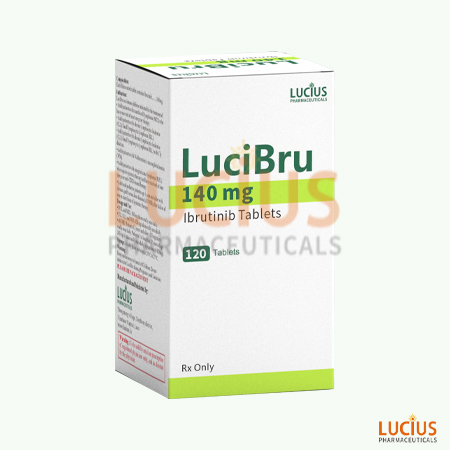
Adult patients with mantle cell lymphoma (MCL) who have received at least one prior therapy.
Adult patients with chronic lymphocytic leukemia (CLL)/small lymphocytic lymphoma (SLL).
Adult patients with chronic lymphocytic leukemia (CLL)/small lymphocytic lymphoma (SLL) with 17p deletion.
Adult patients with Waldenström's macroglobulinemia (WM).
Adult patients with marginal zone lymphoma (MZL) who require systemic therapy and have received at least one prior anti-CD20-based therapy.
Adult and pediatric patients aged 1 year and older with chronic graft-versus-host disease (cGVHD) who have failed one or more systemic therapies.
MCL and MZL: 560 mg orally once daily.
CLL/SLL and WM: 420 mg orally once daily.
cGVHD:
① Patients aged 12 years and older: 420 mg orally once daily.
② Patients aged 1 year to younger than 12 years: 240 mg/m² orally once daily (maximum dose: 420 mg).
Do not cut, crush, or chew the tablets.
PregnancyBased on animal study findings, ibrutinib (Imbruvica®) can cause fetal harm. There are no available data on the use of ibrutinib in pregnant women, so the risks of drug-related major birth defects and miscarriage cannot be determined. In animal reproductive studies, pregnant animals administered ibrutinib during the period of organogenesis at exposures up to 3–20 times the clinical dose (420 mg daily) exhibited embryo-fetal toxicity, including structural abnormalities (see Data). Advise pregnant women of the potential risk to the fetus.
LactationThere are no data regarding the presence of ibrutinib or its metabolites in human milk, the effects on breastfed infants, or the effects on milk production. Due to the potential for serious adverse reactions in breastfed children, advise women not to breastfeed during treatment with ibrutinib and for 1 week after the last dose.
Males and Females of Reproductive PotentialIbrutinib can cause fetal harm when administered to pregnant women. Verify the pregnancy status of females of reproductive potential prior to initiating ibrutinib treatment. Advise females of reproductive potential to use effective contraception during treatment with ibrutinib and for 1 month after the last dose. Advise male partners of females of reproductive potential to use effective contraception during treatment with ibrutinib and for 1 month after the last dose.
Chronic GVHDThe safety and effectiveness of ibrutinib have been established in pediatric patients aged 1 year and older with cGVHD who have failed one or more systemic therapies. Evidence from the iMAGINE study supports the use of ibrutinib for this indication, which enrolled pediatric patients aged 1 year and older with prior cGVHD treatment, including the following age groups: 1 patient aged 1 year to younger than 2 years, 20 patients aged 2 years to younger than 12 years, and 19 patients aged 12 years to younger than 17 years. Additional supportive efficacy data in adult patients were provided by Study 1129. The recommended dose for patients aged 12 years and older is the same as that for adults, and the recommended dose for patients aged 1 year to younger than 12 years is based on body surface area (BSA). The safety and effectiveness of this indication have not been established in pediatric patients younger than 1 year.
Mature B-cell Non-Hodgkin LymphomaThe safety and effectiveness of ibrutinib in combination with chemoimmunotherapy were evaluated in an open-label, randomized study (NCT02703272) involving 35 patients, including 26 pediatric patients aged 5 years to younger than 17 years, with previously treated mature B-cell non-Hodgkin lymphoma. This study was terminated due to lack of efficacy. In the randomized population, major hemorrhage and discontinuation of chemoimmunotherapy due to adverse reactions occurred more frequently in the ibrutinib plus chemoimmunotherapy group compared with the chemoimmunotherapy alone group.
CLL/SLL, CLL/SLL with 17p Deletion, WMThe safety and effectiveness of ibrutinib have not been established in pediatric patients with CLL/SLL, CLL/SLL with 17p deletion, or WM.
Geriatric UseAmong 992 patients in clinical studies of ibrutinib for B-cell malignancies or cGVHD, 62% were aged 65 years and older, and 22% were aged 75 years and older. No overall differences in efficacy were observed between elderly and younger patients. Anemia (all grades), pneumonia (grade 3 or higher), thrombocytopenia, hypertension, and atrial fibrillation were more common in elderly patients treated with ibrutinib.
Adult Patients with B-cell MalignanciesAvoid the use of ibrutinib in patients with severe hepatic impairment (Child-Pugh Class C). The safety of ibrutinib in patients with mild to severe hepatic impairment has not been evaluated according to Child-Pugh criteria. Reduce the recommended dose of ibrutinib in patients with mild or moderate hepatic impairment (Child-Pugh Class A and B). Monitor patients for adverse reactions to ibrutinib more frequently.
Patients with cGVHDAvoid the use of ibrutinib in patients with total bilirubin levels greater than 3 × ULN (except for cases caused by non-hepatic origin or Gilbert's syndrome). Reduce the recommended dose of ibrutinib in patients with total bilirubin levels greater than 1.5 to 3 × ULN (except for cases caused by non-hepatic origin or Gilbert's syndrome).
PlasmapheresisManagement of hyperviscosity in patients with WM before and during ibrutinib treatment may include plasmapheresis. No dosage adjustment of ibrutinib is required.
Effect of CYP3A Inhibitors on IbrutinibCoadministration of ibrutinib with strong or moderate CYP3A inhibitors may increase plasma concentrations of ibrutinib. Increased ibrutinib concentrations may increase the risk of drug-related toxicities. Dose adjustment of ibrutinib is recommended when coadministered with posaconazole, voriconazole, and moderate CYP3A inhibitors. Avoid coadministration with other strong CYP3A inhibitors. If these inhibitors are used for short-term treatment (e.g., anti-infective agents for 7 days or less), interrupt ibrutinib treatment. Avoid consumption of grapefruit and Seville oranges during ibrutinib treatment, as they contain strong or moderate CYP3A inhibitors.
Effect of CYP3A Inducers on IbrutinibCoadministration of ibrutinib with strong CYP3A inducers may decrease ibrutinib concentrations. Avoid coadministration with strong CYP3A inducers.
The most common adverse reactions (≥ 30%) in patients with B-cell malignancies (MCL, CLL/SLL, WM, and MZL) are: thrombocytopenia, diarrhea, fatigue, musculoskeletal pain, neutropenia, rash, anemia, and bruising.
The most common adverse reactions (≥ 20%) in adult or pediatric patients with cGVHD are: fatigue, anemia, bruising, diarrhea, thrombocytopenia, musculoskeletal pain, pyrexia, muscle spasms, stomatitis, hemorrhage, nausea, abdominal pain, pneumonia, and headache.
Not established.
Tablets.
Store at 20°C to 25°C (68°F to 77°F). Short-term excursions between 15°C and 30°C (59°F and 86°F) are permitted for transportation.


Telegram name: Vira
Name: LUCIUS
No.:0085253923643
