
Your Health, We Care


Release date: 2025-12-03 11:56:43 Recommended: 344
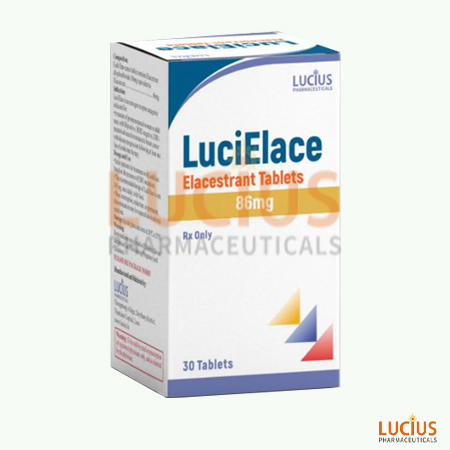
Elacestrant is an estrogen receptor antagonist indicated for:
The treatment of postmenopausal women or adult men with ER-positive, HER2-negative, ESR1-mutated advanced or metastatic breast cancer that has progressed following at least one line of endocrine therapy.
Select patients for Elacestrant treatment based on the presence of ESR1 mutation.
The recommended dosage of Elacestrant is one 345 mg tablet taken orally once daily, with food.
Interruption, reduction, or permanent discontinuation of treatment may be necessary based on adverse reactions.
Lactation: Breastfeeding is not recommended.
Hepatic Impairment: Avoid use in patients with severe hepatic impairment (Child-Pugh Class C). Reduce the dosage in patients with moderate hepatic impairment (Child-Pugh Class B).
Dyslipidemia: Elacestrant may cause hypercholesterolemia and hypertriglyceridemia. Monitor lipid levels before initiating treatment and periodically during treatment.
Embryo-Fetal Toxicity: Elacestrant can cause fetal harm. Inform patients of the potential risk to the fetus and advise them to use effective contraceptive measures.
Strong and Moderate CYP3A4 Inducers: Concomitant use with Elacestrant should be avoided.
Strong and Moderate CYP3A4 Inhibitors: Concomitant use with LuciElace should be avoided.
The most common (> 10%) adverse reactions (including laboratory abnormalities) of Elacestrant are musculoskeletal pain, nausea, increased cholesterol, increased AST, increased triglycerides, fatigue, decreased hemoglobin, vomiting, increased ALT, decreased sodium, increased creatinine, decreased appetite, diarrhea, headache, constipation, abdominal pain, hot flashes, and dyspepsia.
Not established.
Tablets
Store at 20°C to 25°C (68°F to 77°F); short-term transportation between 15°C and 30°C (59°F and 86°F) is permitted. Protect from moisture.


Telegram name: Vira
Name: LUCIUS
No.:0085253923643
