
Your Health, We Care


Release date: 2025-12-18 14:14:52 Recommended: 292
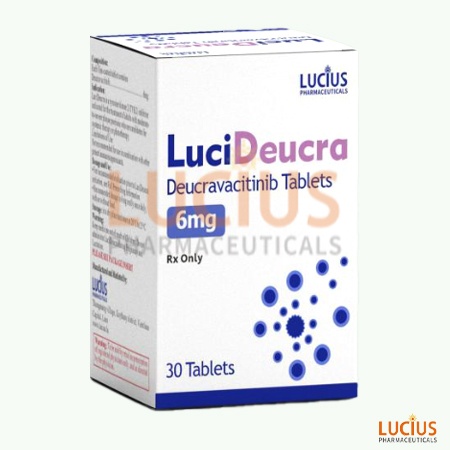
Deucravacitinib is a tyrosine kinase 2 (TYK2) inhibitor indicated for the treatment of adult patients with moderate to severe plaque psoriasis who are candidates for systemic therapy or phototherapy.
Use Restriction: Concomitant use with other potent immunosuppressants is not recommended.
For assessments prior to the use of deucravacitinib, please refer to the full prescribing information.
The recommended dosage is 6 mg orally once daily, with or without food.
PregnancyFemales are advised to discontinue deucravacitinib during pregnancy.
LactationThere are no available data regarding the presence of deucravacitinib in human milk. Considering the potential risk to infants, females are advised to discontinue deucravacitinib during breastfeeding. If deucravacitinib must be taken, breastfeeding should be discontinued.
Pediatric UseThe safety and effectiveness of deucravacitinib in pediatric patients have not been established.
Geriatric UseNo significant differences in efficacy were observed between geriatric patients and younger patients.
Renal ImpairmentNo dosage adjustment is recommended for patients with mild, moderate, or severe renal impairment, or those with end-stage renal disease (ESRD) receiving dialysis.
Hepatic ImpairmentNo dosage adjustment is recommended for patients with mild (Child-Pugh A) or moderate (Child-Pugh B) hepatic impairment. Deucravacitinib is not recommended for use in patients with severe hepatic impairment (Child-Pugh C).
There are no available data on deucravacitinib overdosage. In case of overdosage, consult a physician and seek medical attention promptly.Hemodialysis removes a small amount of deucravacitinib (5.4% of the dose per dialysis session), so hemodialysis is not considered an effective method for managing deucravacitinib overdosage.
The most common adverse reactions (≥ 1%) include upper respiratory tract infection, increased blood creatine phosphokinase, herpes simplex, oral ulcer, folliculitis, and acne.
Hypersensitivity to any component of deucravacitinib is a contraindication.
Inactive ingredients: lactose anhydrous, croscarmellose sodium, hypromellose acetate succinate, magnesium stearate, microcrystalline cellulose, and colloidal silicon dioxide.
In addition, the pink Opadry® II film coating contains the following inactive ingredients: polyvinyl alcohol, titanium dioxide, polyethylene glycol, talc, iron oxide red, and iron oxide yellow.
Tablets
Store at 20°C to 25°C (68°F to 77°F). Short-term excursions between 15°C and 30°C (59°F and 86°F) are permitted for transportation.


Telegram name: Vira
Name: LUCIUS
No.:0085253923643
