
Your Health, We Care


Release date: 2025-12-17 15:04:17 Recommended: 298
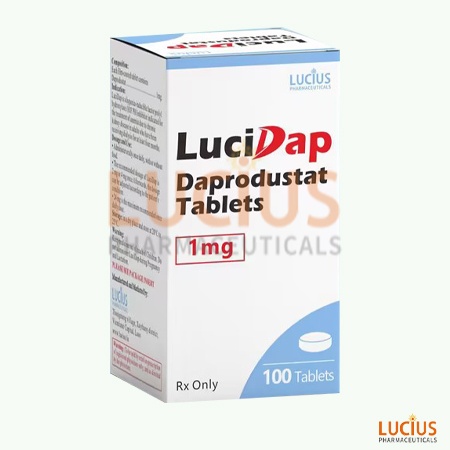
Daprodustat is indicated for the treatment of anemia caused by chronic kidney disease in adult patients who have undergone dialysis for at least four months.
For patients with chronic kidney disease in the conservative phase who have not been treated with erythropoiesis-stimulating agents (ESAs)The usual initial dose for adults is 2 mg or 4 mg, administered orally once daily. The dose may then be adjusted according to the patient's condition, with a maximum daily dose of 24 mg once daily.
For patients switching from erythropoiesis-stimulating agents (ESAs)The usual dose for adults is 4 mg, administered orally once daily. The dose may then be adjusted according to the patient's condition, with a maximum daily dose of 24 mg once daily.
For dialysis patientsThe usual dose for adults is 4 mg, administered orally once daily. The dose may then be adjusted according to the patient's condition, with a maximum daily dose of 24 mg once daily.
Patients with complications/medical historyPatients with cerebral infarction, myocardial infarction, pulmonary embolism, or a history of these conditions may experience exacerbation or induction of thromboembolism when taking this product.
Hypertensive patientsAn increase in blood pressure may occur.
Patients with malignant tumorsSince administration of this drug may promote angiogenesis, it may exacerbate malignant tumors.
Patients with proliferative diabetic retinopathy, macular edema, exudative age-related macular degeneration, retinal vein occlusion, etc.Retinal hemorrhage may occur because use of this drug may promote angiogenesis.
Patients with hepatic impairmentConsider reducing the dose of this drug and closely monitor the patient's condition. In patients with mild to moderate hepatic impairment (Child-Pugh Class A and B), single-dose administration of 6 mg of this product results in increased Cmax and AUC0-∞. Clinical trials have not been conducted in patients with severe hepatic impairment (Child-Pugh Class C).
Pregnant womenAdminister to pregnant women or women of childbearing potential only if the expected therapeutic benefit outweighs the potential risk. This drug may cross the placenta to the fetus.
Lactating womenThe therapeutic benefits of treatment and the nutritional benefits of breastfeeding should be considered when deciding whether to continue or discontinue breastfeeding. When this drug was administered orally to lactating rats, the drug was detected in the plasma of 10-day-old neonatal rats, indicating that this drug may be excreted in human milk.
Pediatric population, etc.Clinical trials have not been conducted in pediatric patients.
General considerations for adverse reactionsThe following adverse reactions may occur. Close observation of the patient is required. If abnormalities are detected, appropriate measures such as discontinuation of administration should be taken.
Thromboembolism (0.8%): Cerebral infarction (0.3%), pulmonary embolism (0.3%), retinal vein occlusion (0.3%), deep vein thrombosis (0.3%), and shunt thrombosis (e.g., shunt obstruction) (frequency unknown) may occur in some cases.
Other adverse reactions (incidence < 1%)
Hypersensitivity: Rash, dermatitis, urticaria
Cardiovascular: Hypertension
During the initial phase of administration, measure hemoglobin concentration approximately every two weeks until the hemoglobin concentration stabilizes within the target range.
During the maintenance phase of administration, measure hemoglobin concentration and other relevant parameters approximately every four weeks to avoid excessive hematopoiesis. Clinical trials of erythropoiesis-stimulating agents (ESAs) have reported that setting a high target hemoglobin level is associated with an increased risk of death, cardiovascular events, and stroke.
If the hemoglobin concentration increases sharply by more than 2.0 g/dL within four weeks, appropriate measures such as prompt dose reduction or discontinuation of the drug should be taken.
In hemodialysis and peritoneal dialysis patients who were receiving high doses of erythropoiesis-stimulating agents (ESAs), hemoglobin concentration tends to decrease after switching to this drug. Therefore, the necessity of switching to this drug should be carefully evaluated. When switching to this drug, monitor closely for a decrease in hemoglobin concentration following the switch.
Since administration of this product may cause an increase in blood pressure, close monitoring of blood pressure changes is required during treatment.
Iron is required for hematopoiesis. Therefore, iron supplements should be administered if the patient has iron deficiency.
This drug is contraindicated in patients with a history of hypersensitivity to any component of this product.
Tablets.
Store at 20°C to 25°C (68°F to 77°F). Short-term transportation is permitted at temperatures ranging from 15°C to 30°C (59°F to 86°F).


Telegram name: Vira
Name: LUCIUS
No.:0085253923643
