
Your Health, We Care


Release date: 2026-10-23 16:59:44 Recommended: 10
This article is the package insert for Cabozantinib (LuciCaboz) tablets. Do not substitute Cabozantinib capsules for Cabozantinib tablets. If you encounter any problems, please consult a doctor and do not make decisions on your own.
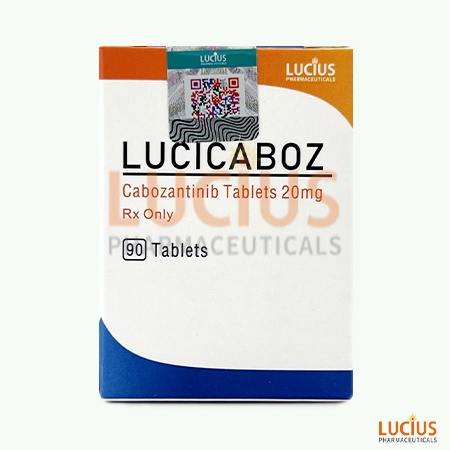
Cabozantinib(LuciCaboz)
Cabozantinib (LuciCaboz) is indicated for the treatment of patients with advanced renal cell carcinoma (RCC). When used in combination with nivolumab, it is indicated for the first-line treatment of patients with advanced renal cell carcinoma (RCC).
Cabozantinib (LuciCaboz) is indicated for the treatment of patients with hepatocellular carcinoma (HCC) who have been previously treated with sorafenib.
Cabozantinib (LuciCaboz) is indicated for the treatment of adult and pediatric patients 12 years of age and older with locally advanced or metastatic differentiated thyroid cancer (DTC) that has progressed following prior VEGFR-targeted therapy and who are radioactive iodine-refractory or ineligible for radioactive iodine therapy.
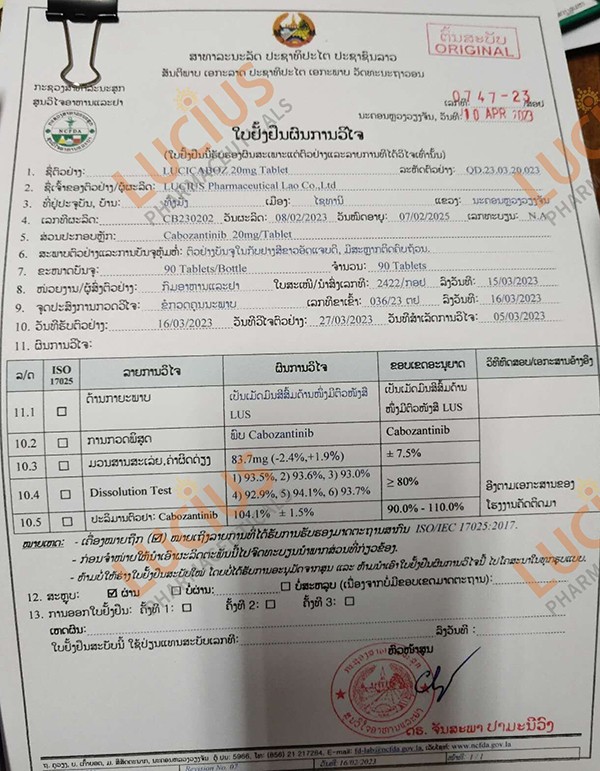
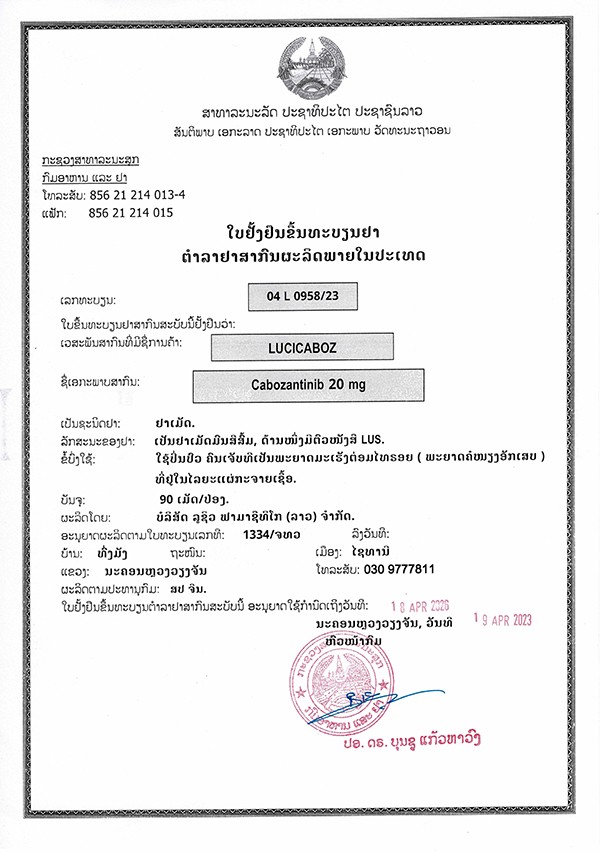
Stop treatment with Cabozantinib (LuciCaboz) at least 3 weeks prior to scheduled surgery (including dental surgery).
1. For monotherapy, the recommended dosage is 60 mg orally once daily until disease progression or unacceptable toxicity.
2. When used in combination with nivolumab for the treatment of advanced renal cell carcinoma, the recommended dosage of Cabozantinib (LuciCaboz) is 40 mg orally once daily until disease progression or unacceptable toxicity. For patients with moderate hepatic impairment, the dose is reduced to 20 mg orally once daily when used in combination.
3. Recommended dosage for hepatocellular carcinoma: The recommended monotherapy dosage is 60 mg orally once daily until disease progression or unacceptable toxicity.
4. Recommended dosage for differentiated thyroid cancer: The recommended monotherapy dosage for adult and pediatric patients 12 years of age and older is 60 mg orally once daily until disease progression or unacceptable toxicity.
Take at least 1 hour before or 2 hours after a meal. Swallow tablets whole with water; do not crush, chew, or open them.
If less than 12 hours remain until the next dose, do not take the missed dose.
There have been reports of overdosage with Cabozantinib (LuciCaboz). Symptoms of overdosage include nausea, vomiting, diarrhea, weakness, hypertension, and dehydration. Manage with symptomatic treatment.
1. Pregnancy: Based on animal studies and its mechanism of action, it can cause fetal harm. It is contraindicated in pregnant women.
2. Lactation: Because of the potential for serious adverse reactions, advise not to breastfeed.
3. Females and Males of Reproductive Potential: Verify pregnancy status prior to initiating treatment. Females should use effective contraception during treatment and for 4 months after the last dose, and males should use effective contraception during treatment and for 7 months after the last dose. May impair male fertility.
4. Pediatric Use: The safety and effectiveness in pediatric patients under 12 years of age have not been established.
5. Geriatric Use: Of the 1,459 patients, 40% were 65 years of age and older. No differences in safety or effectiveness were observed between elderly patients and younger patients.
6. Hepatic Impairment: No starting dose adjustment is required for mild or moderate hepatic impairment. Avoid use in patients with severe hepatic impairment.
7. Renal Impairment: No dose adjustment is required for mild or moderate renal impairment. Data in patients with severe renal impairment are limited.
1. If the starting dose is 60 mg once daily, the first dose reduction is to 40 mg once daily, and the second dose reduction is to 20 mg once daily.
2. If the starting dose is 40 mg once daily (e.g., in combination therapy), the first dose reduction is to 20 mg once daily, and the second dose reduction is to 20 mg every other day.
1. Hemorrhage (Grade 3 or 4): Withhold dosing until recovery to Grade 1 or lower, then resume at a reduced dose.
2. For perforations and fistulas (any grade), thromboembolic events (any grade), or reversible posterior leukoencephalopathy syndrome (any grade), permanently discontinue the drug.
3. For hypertension (Grade 3 or 4), diarrhea (Grade 3 or 4), palmar-plantar erythrodysesthesia syndrome (Grade 3 or 4), proteinuria (Grade 3 or 4), or other adverse reactions (Grade 3 or 4), withhold dosing until recovery to Grade 1 or lower, then resume at a reduced dose.
1. For Grade 3 diarrhea or palmar-plantar erythrodysesthesia syndrome, withhold Cabozantinib (LuciCaboz) until recovery to Grade 1 or lower, then resume at a reduced dose.
2. For Grade 4 diarrhea, Grade 4 palmar-plantar erythrodysesthesia syndrome, or Grade 3/4 hepatotoxicity, permanently discontinue Cabozantinib (LuciCaboz).
1. Strong CYP3A4 Inhibitors or Inducers: If concomitant use with strong CYP3A4 inhibitors or inducers cannot be avoided, reduce or increase the daily dose of Cabozantinib (LuciCaboz) by 20 mg (e.g., from 60 mg to 40 mg, or from 40 mg to 20 mg; and vice versa). Do not exceed a total daily dose of 80 mg.
2. For patients with moderate hepatic impairment (Child-Pugh Class B), reduce the monotherapy dose to 60 mg once daily (or to 40 mg if used in combination therapy).
3. Avoid the use of Cabozantinib (LuciCaboz) in patients with severe hepatic impairment (Child-Pugh Class C).
Because clinical trials are conducted under widely varying conditions, adverse reaction rates observed in the clinical trials of a drug cannot be directly compared to rates in the clinical trials of another drug and may not reflect the rates observed in clinical practice. The safety of Cabozantinib (LuciCaboz) was evaluated in 1,459 patients with advanced solid tumors.
In a randomized trial of advanced renal cell carcinoma (RCC) (Cabozantinib (LuciCaboz) monotherapy group n=331, everolimus control group n=322), adverse reactions with an incidence of ≥25% and more common in the Cabozantinib (LuciCaboz) group, and their incidences, are as follows (Cabozantinib (LuciCaboz) group vs. everolimus group): diarrhea (74% vs. 25%), fatigue (56% vs. 47%), nausea (50% vs. 28%), decreased appetite (46% vs. 32%), palmar-plantar erythrodysesthesia syndrome (42% vs. 7%), hypertension (39% vs. 7%), vomiting (32% vs. 20%), and weight decreased (30% vs. 12%). The most common Grade 3 or 4 adverse reactions were diarrhea (10% vs. 2%), palmar-plantar erythrodysesthesia syndrome (8% vs. 1%), and hypertension (8% vs. 1%). Adverse reactions leading to permanent discontinuation occurred in 10% of the Cabozantinib (LuciCaboz) group and 9% of the everolimus group. Adverse reactions leading to dose reduction occurred in 60% of the Cabozantinib (LuciCaboz) group and 24% of the everolimus group.
In a randomized trial of hepatocellular carcinoma (HCC) (Cabozantinib (LuciCaboz) group n=467, placebo group n=237), adverse reactions with an incidence of ≥25% and more common in the Cabozantinib (LuciCaboz) group (Cabozantinib (LuciCaboz) vs. placebo) include: diarrhea (54% vs. 19%), decreased appetite (48% vs. 18%), palmar-plantar erythrodysesthesia syndrome (46% vs. 5%), fatigue (45% vs. 30%), nausea (31% vs. 14%), hypertension (29% vs. 6%), vomiting (26% vs. 12%), and weight decreased (26% vs. 11%). The most common Grade 3 or 4 adverse reactions were palmar-plantar erythrodysesthesia syndrome (17%), diarrhea (10%), and hypertension (7%).
In a randomized trial of differentiated thyroid cancer (DTC) (Cabozantinib (LuciCaboz) group n=125, placebo group n=62), adverse reactions with an incidence of ≥25% and more common in the Cabozantinib (LuciCaboz) group include: diarrhea (64% vs. 3%), fatigue (64% vs. 48%), palmar-plantar erythrodysesthesia syndrome (50% vs. 0%), weight decreased (48% vs. 13%), decreased appetite (46% vs. 21%), hypertension (45% vs. 8%), nausea (43% vs. 21%), stomatitis (37% vs. 3%), dysgeusia (34% vs. 3%), hair color changes (34% vs. 2%), and vomiting (32% vs. 11%). The most common Grade 3 or 4 adverse reactions were palmar-plantar erythrodysesthesia syndrome (13%), diarrhea (11%), fatigue (11%), and hypertension (11%).
In a first-line combination therapy trial for advanced RCC (Cabozantinib (LuciCaboz) combined with nivolumab group n=320, sunitinib group n=320), adverse reactions with an incidence of ≥20% and more common in the combination group (combination group vs. sunitinib group) were: diarrhea (64% vs. 46%), fatigue (51% vs. 51%), palmar-plantar erythrodysesthesia syndrome (40% vs. 8%), nausea (36% vs. 31%), decreased appetite (31% vs. 20%), hypertension (31% vs. 31%), hypothyroidism (27% vs. 20%), vomiting (26% vs. 15%), abdominal pain (23% vs. 15%), and rash (22% vs. 19%). The most common Grade 3 or 4 adverse reactions were hypertension (10%), diarrhea (7%), and fatigue (6%).
During post-approval use of Cabozantinib (LuciCaboz), the following adverse reactions have been identified: Gastrointestinal (pancreatitis), Skin and subcutaneous tissue disorders (palmar-plantar erythrodysesthesia syndrome), Musculoskeletal and connective tissue disorders (osteonecrosis of the jaw), Investigations (alanine aminotransferase increased).
1. Hepatotoxicity: Cabozantinib (LuciCaboz) can cause hepatotoxicity. Severe and fatal hepatotoxicity (including elevated transaminases, hepatocellular necrosis, hepatitis, and hepatic failure) has occurred in patients receiving Cabozantinib (LuciCaboz). Monitor liver function tests (ALT, AST, and bilirubin) regularly during treatment. If a Grade 3 or 4 hepatotoxicity event occurs, withhold dosing; if it does not resolve within 4 weeks, discontinue the drug. Permanently discontinue for hepatic encephalopathy, clinically significant ascites, or hepatic failure.
2. Perforations and Fistulas: Serious and fatal gastrointestinal perforations and fistulas have occurred in patients receiving Cabozantinib (LuciCaboz). Monitor patients for symptoms, including abdominal pain, nausea, vomiting, and fever. Permanently discontinue the drug for fistulas of any grade or Grade 4 perforation.
3. Hemorrhage: Serious and fatal hemorrhagic events have occurred. Withhold dosing for Grade 3 or 4 hemorrhagic events.
4. Thromboembolic Events: Serious arterial and venous thromboembolic events have occurred. Discontinue Cabozantinib (LuciCaboz) for myocardial infarction, cerebral infarction, or any other serious arterial thromboembolic event.
5. Hypertension and Hypertensive Crisis: Severe hypertension and hypertensive crisis have occurred. Control blood pressure before starting treatment. Monitor blood pressure regularly during treatment. Withhold dosing for hypertension that is not adequately controlled by antihypertensive therapy; discontinue the drug for hypertensive crisis or severe uncontrolled hypertension.
6. Diarrhea: Severe diarrhea may occur. For Grade 3 or 4 diarrhea, withhold dosing until recovery to Grade 1 or lower, then resume at a reduced dose.
7. Palmar-Plantar Erythrodysesthesia Syndrome (PPE): Severe PPE has occurred. For Grade 3 or 4 PPE, withhold dosing until recovery to Grade 1 or lower, then resume at a reduced dose.
8. Proteinuria: Proteinuria and nephrotic syndrome have occurred. Monitor urine protein regularly during treatment. For Grade 3 or 4 proteinuria, withhold dosing until recovery to Grade 1 or lower. Discontinue the drug if nephrotic syndrome occurs.
9. Reversible Posterior Leukoencephalopathy Syndrome (RPLS): RPLS has occurred. Evaluate patients who present with seizures, headache, visual disturbances, confusion, or altered mental function for RPLS. Discontinue the drug in confirmed cases.
10. Osteonecrosis of the Jaw (ONJ): ONJ may occur. Perform oral examinations before initiating and periodically during Cabozantinib (LuciCaboz) treatment. If ONJ occurs, withhold dosing until symptoms resolve.
11. Impaired Wound Healing: Wound complications have occurred. Withhold Cabozantinib (LuciCaboz) at least 2 weeks prior to elective surgery. Do not use Cabozantinib (LuciCaboz) for at least 2 weeks after major surgery and until adequate wound healing has occurred.
12. Thyroid Dysfunction: Hypothyroidism and hyperthyroidism have occurred. Monitor thyroid function regularly during treatment and treat as clinically indicated.
13. Embryo-Fetal Toxicity: Based on animal study data and its mechanism of action, Cabozantinib (LuciCaboz) can cause fetal harm when administered to a pregnant woman. Advise females of reproductive potential to use effective contraception during treatment and for 4 months after the last dose; advise males with female partners of reproductive potential to use effective contraception during treatment and for 7 months after the last dose.
14. Effects on Bone and Mineral Density: Swelling of the body has been observed in children with open growth plates. The safety and effectiveness of Cabozantinib (LuciCaboz) have not been established in children under 12 years of age.
Strong CYP3A4 inhibitors increase the plasma concentration of cabozantinib and should be avoided; if unavoidable, reduce the dose of Cabozantinib (LuciCaboz). Strong CYP3A4 inducers decrease the plasma concentration of cabozantinib and should be avoided; if unavoidable, increase the dose of Cabozantinib (LuciCaboz).
Cabozantinib is an inhibitor of CYP3A4 and CYP2C9, and a substrate of P-glycoprotein (P-gp). Use caution when coadministered with CYP3A4 substrates, CYP2C9 substrates, or P-gp substrates.
Cabozantinib (LuciCaboz) tablets are white to off-white, opaque, film-coated, round, biconvex tablets.
Mechanism of Action: Cabozantinib is a kinase inhibitor that inhibits the activity of RET, MET, VEGFR-1, -2, -3, KIT, TRKB, FLT-3, AXL, and TIE-2.
Pharmacokinetics: Following oral administration, peak plasma concentrations of cabozantinib are reached within 2 to 5 hours. A high-fat meal increases its exposure.
Nonclinical Toxicology: Carcinogenicity studies have not been conducted. No mutagenicity was observed in in vitro and in vivo assays.
Clinical Studies: Covers detailed survival data from the pivotal trials for RCC, HCC, and DTC mentioned above (including statistically significant improvements in overall survival [OS] and progression-free survival [PFS]).
Store at 20°C to 25°C (68°F to 77°F).
Manufacturer: Lucius Pharmaceuticals (Lao) Co.,Ltd.
Address: ABuilding, Tongji village, Xinyangdistrict, Vientiane, Laos.
Website: www.laoslucius.com


Telegram name: Vira
Name: LUCIUS
No.:0085253923643
