
Your Health, We Care


Release date: 2025-12-02 13:28:19 Recommended: 344
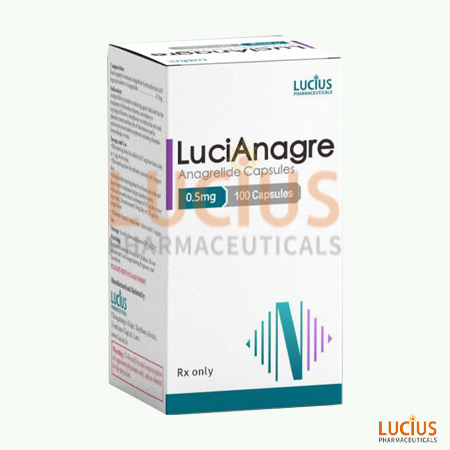
Anagrelide is a thrombocytopenic agent indicated for the treatment of thrombocythemia secondary to myeloproliferative neoplasms. It is used to reduce the risk of elevated platelet counts and thrombosis, as well as to improve related symptoms, including thrombohemorrhagic events.
Adult starting dose: 0.5 mg four times daily, or 1 mg twice daily.
Pediatric patient starting dose: 0.5 mg once daily.
Maintain the starting dose for at least one week, then adjust gradually to maintain the target platelet count.
The dose increase shall not exceed 0.5 mg/day in any one week. The single dose shall not exceed 10 mg/day or 2.5 mg per administration.
Moderate hepatic impairment: Start at 0.5 mg once daily.
Lactating mothers: Discontinue breastfeeding or discontinue the medication.
Cardiovascular toxicity: Anagrelide has been reported to cause QT interval prolongation and ventricular tachycardia. Conduct cardiovascular evaluation, including electrocardiogram (ECG), for all patients before treatment. Monitor patients' cardiovascular conditions.
Pulmonary hypertension: Evaluate potential cardiopulmonary diseases before initiating treatment.
Bleeding risk: Monitor patients for bleeding, including those receiving combination therapy with other drugs known to cause bleeding.
Other PDE 3 inhibitors: May potentiate the effect of reduced myocardial contractility.
Aspirin and drugs that increase bleeding risk: Concurrent use may increase the risk of bleeding.
The most common adverse reactions (incidence ≥ 5%) include headache, palpitations, diarrhea, fatigue, edema, nausea, abdominal pain, dizziness, pain, dyspnea, cough, flatulence, vomiting, fever, peripheral edema, rash, chest pain, anorexia, tachycardia, malaise, paresthesia, back pain, pruritus, and dyspepsia.
No specific contraindications have been identified.
Capsules.
Store at 20°C to 25°C (68°F to 77°F). Short-term transport between 15°C and 30°C (59°F and 86°F) is permitted. Protect from moisture.


Telegram name: Vira
Name: LUCIUS
No.:0085253923643
