
Your Health, We Care


Another NameGilotrif,Tomtovok,阿法替尼,BIBW2992/BIBW-2992
IndicationsAfatinib can be used to treat Non Small Cell Lung Cancer.
Reg No.07 L 1142/24
Inspection NO.1608-24


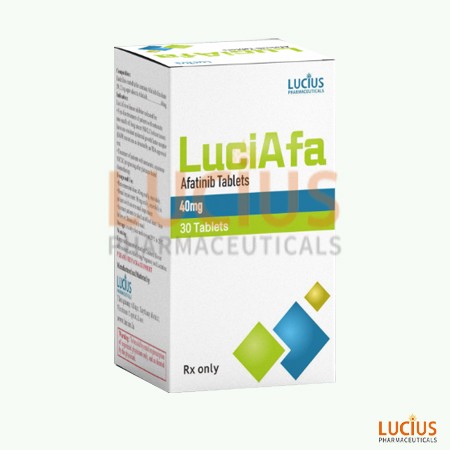
Afatinib is an irreversible inhibitor of tyrosine kinase (TK) developed by Boehringer Ingelheim Pharmaceuticals. The specification is 40mg * 30Tablets.
Afatinib was approved by the US FDA for marketing in the United States on July 12, 2013, under the trade name Gilotrif.
Afatinib exerts its effects by irreversibly blocking ErbB family receptors (including EGFR, HER2, etc.), thereby shutting down cancer cell signaling pathways and inhibiting tumor growth.
Afatinib
Afatinib is suitable for EGFR mutation positive metastatic non-small cell lung cancer.
Based on findings from animal studies and its mechanism of action, Afatinib can cause fetal harm when administered to a pregnant woman. There are no available data on the use of Afatinib in pregnant women.
There are no data on the presence of afatinib in human milk or its effects on the breastfed infant or on milk production.Because of the potential for serious adverse reactions in breastfed infants from Afatinib, advise women not to breastfeed during treatment with Afatinib and for 2 weeks after the final dose.
Females
Afatinib can cause fetal harm when administered to a pregnant woman. Advise females of reproductive potential to use effective contraception during treatment with Afatinib and for at least 2 weeks after the last dose of Afatinib.
Safety and effectiveness of Afatinib in pediatric patients have not been established.
No overall differences in safety were observed between patients 65 years and older and younger patients.
Patients with severe renal impairment have a higher exposure to afatinib than patients with normal renal function. Afatinib has not been studied in patients with eGFR <15 mL/min/1.73 m2 or on dialysis.
Afatinib has not been studied in patients with severe (Child Pugh C) hepatic impairment.Closely monitor patients with severe hepatic impairment and adjust Afatinib dose if not tolerated.
Overdose was reported in 2 healthy adolescents each of whom ingested 360 mg of Afatinib (as part of a mixed-drug ingestion) resulting in nausea, vomiting, asthenia, dizziness, headache, abdominal pain, and elevated amylase [<1.5 times upper limit of normal (ULN)]. Both subjects recovered.
Store at 20°C to 25°C (68°F to 77°F); excursions permitted to 15° to 30°C (59° to 86°F). Dispense medication in the original container to protect from exposure to high humidity and light.
Following oral administration of Afatinib tablets, time to peak afatinib plasma concentrations (Tmax) is 2 to 5 hours. Maximum concentration (Cmax) and area under the concentration-time curve from time zero to infinity (AUC0-INF) values increased slightly more than dose proportional in the range of 20 to 50 mg. The geometric mean relative bioavailability of 20 mg Afatinib tablets was 92% as compared to an oral solution. Steady-state plasma concentrations are achieved within 8 days of repeat dosing of Afatinib resulting in an accumulation of 2.8-fold for AUC and 2.1-fold for Cmax.
from FDA,2022.04
